
REVIEW · BELGRADE
Tito and History Vintage Car Tour
A Yugo tour sounds almost too good. On this private Belgrade ride, you pair iconic Tito-era sites with hands-on stories about Yugoslavia’s famous cars, including the Yugo convertible. I like how guide Jovana ties the cars to what you see on the streets, and I also like the simple comfort perks like snacks and soda during the drive.
One heads-up, though: this is built more around landmark stops and car talk than it is around long car viewing time, so plan for short looks and walking in between.
In This Review
- Key Points at a Glance
- Tito and History Vintage Car Tour, Why Belgrade Works So Well
- Price and Logistics, What $144 Actually Covers
- Meeting Point, Pickup, and the Pace You Should Expect
- Stop 1, Belgrade City Assembly at the House of the National Assembly
- Park of Friendship, The Peace Alley and the Non-Aligned Summit Story
- Palata Srbije, Modernist Architecture and the Inside You Cannot See
- Western City Gate, Genex Tower Brutalism and the Revolving Restaurant Detail
- Museum of Yugoslavia, Gifts to Tito and Why This Museum Feels Different
- The Yugo Factor, Car Stories You Can Actually Use
- Who Should Book Tito and History Vintage Car Tour
- Should You Book This Tour?
- FAQ
- How long is the Tito and History Vintage Car Tour?
- What is the price for this private tour?
- Is pickup available?
- Where is the meeting point?
- Is this tour private or shared with other groups?
- Does the tour include admission tickets?
- What stops are included?
- What happens if the weather is poor?
- How flexible is cancellation?
Key Points at a Glance
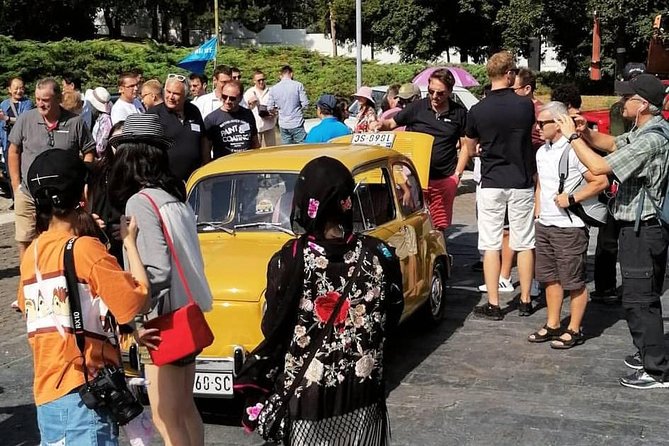
- Yugo talk you can’t get from a normal bus tour, even the convertible angle
- Snacks and soda included to keep a 2 to 3 hour loop pleasant
- Big landmarks in Belgrade’s Tito footprint, from modernism to brutalism
- Museum of Yugoslavia time is real, with admission included
- All fees handled, so you avoid ticket admin on the spot
The Yugoslav decades, told on the street
Tito and History Vintage Car Tour, Why Belgrade Works So Well
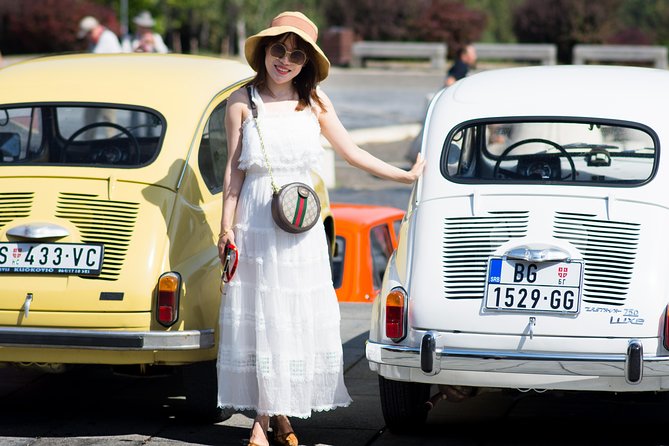
Belgrade is one of those cities where modern life still runs right through the older story lines. This tour leans into that idea hard, using vintage Yugoslav cars as your doorway into Tito-era culture, industry, and symbolism. The star is the Yugo, the compact car that still gets joked about as the worst car in the world. But the fun part is that the guide uses that reputation as a springboard, not a punchline, to explain what made it a product of its time.
I like how the route does not treat car history like a separate show. You walk past political architecture and Cold War leftovers, then you hear how cars fit into the broader Yugoslav narrative. The result feels grounded, not like you are stuck in a trivia lecture with no connection to place.
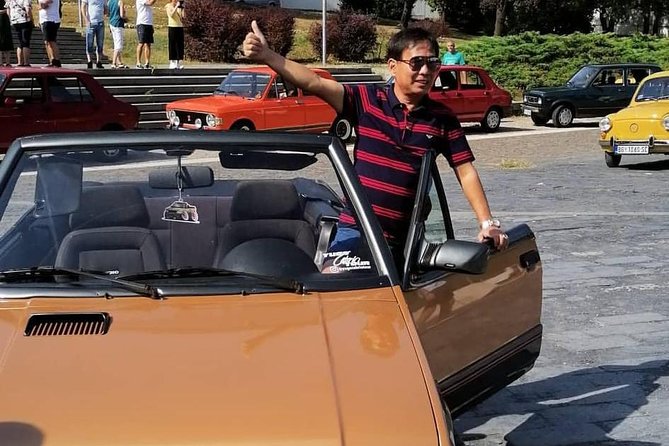
And yes, you do get the specific Yugo focus, including the convertible story. That detail matters because it turns a punchy brand topic into something more visual. Even if you do not care much about cars, you usually care about style, engineering choices, and what people expected from everyday vehicles.
Price and Logistics, What $144 Actually Covers
The price is listed at $144 for a private tour lasting about 2 to 3 hours. For many tours at this length, you end up paying separately for admission tickets, or you end up paying extra once you start walking into museums.
Here, you are told that all fees are taken care of, and the Museum of Yugoslavia admission is included. That is a big deal for value. You also get snacks and soda along the way, plus the option to request pickup. You will also use a mobile ticket, which is the kind of small convenience that makes day-of planning easier.
My practical advice: decide how much you want guided interpretation. If you enjoy learning why buildings look the way they do and why certain objects mattered under Tito, this price starts to feel sensible fast. If you only want the quickest photo stops with minimal talking, you might prefer a cheaper self-guided route.
Meeting Point, Pickup, and the Pace You Should Expect
You start at Dragoslava Jovanovića 14, Beograd 11000. The tour ends at a different location, so do not plan tight connections right after the final stop. The activity runs daily with broad hours listed from 9:00 AM to 9:00 PM, which helps if you are trying to fit it around other plans.
The pickup option is there, but it is not automatic. If you want the smoother start, request it ahead of time. I also like that the tour is described as near public transportation, which gives you a Plan B if pickup timing does not work for your schedule.
Timing-wise, expect a rhythm of short walks and photo moments tied together by car-focused explanations. Your legs will do some work, but it is not a long hike. Comfortable shoes are a good idea because you will be stepping in and out of key Belgrade spots.
Deeper into the Serbian past
- NATO Bombing of Belgrade Historical Tour
★ 5.0 · 17 reviews - Football tour: Red Star and Partizan Ultras History
★ 5.0 · 14 reviews - Tito and History Vintage Car Tour
★ 5.0 · 11 reviews
Stop 1, Belgrade City Assembly at the House of the National Assembly
The first major stop is the House of the National Assembly of the Republic of Serbia, which is tied to the Obrenović dynasty. It used to function as a royal residence, and today it houses the City Assembly of Belgrade. It is one of those locations where history is not just stored in a building, it is still in use.
This is a smart opening stop because it sets a baseline for how power and prestige have changed over time in Belgrade. You are not just starting with Tito-era stuff. You are also seeing how older political authority occupied the same kind of monumental space.
Admission is listed as free for this stop. The time on site is around 15 minutes, so you will not get a long sit-down experience. Instead, you get a quick orientation, and you get the guide’s context so the building stops looking like a random government block.
Potential drawback: if you prefer museum-style pacing with lots of indoor time, this opening is mainly about seeing and listening. You will move on while your attention is still fresh, but you may wish for more time if you really like architecture and interiors.
Park of Friendship, The Peace Alley and the Non-Aligned Summit Story
Then you head to the Park of Friendship, or Park Prijateljstva. The park has a reputation for being an odd mix of idealism and incompleteness, and that tension is part of the point. It is described as a living monument to naivety and tragedy from times past.
The big historical hook here is the Belgrade Conference held in September 1961, the first summit that later became known as the First Summit of the Non-Aligned. The park’s Peace Alley is a long 180 meters lined with trees. Those trees were planted during the summit, and the symbolism is the standout detail. The presidents of attending countries participated, turning a simple walk into a statement about world peace.
The list of names you hear in this context is specific and memorable: Queen Elizabeth II, Margaret Thatcher, Robert Mugabe, Jimmy Carter, Indira Gandhi, Nikolay Chaushescu, and even members of the Rolling Stones. You do not need to be a Cold War buff to feel how unusual that is to see written into a park pathway.
Time on site is about 20 minutes, and admission is free. This stop is great for a quick reset, especially if the city buildings earlier felt heavy. The park gives you space to stand, listen, and notice how international politics can be turned into physical geography.
One practical note: since it is a park, weather matters. The tour is described as requiring good weather, which makes sense given how much of your experience depends on outdoors walking and viewing.
Palata Srbije, Modernist Architecture and the Inside You Cannot See
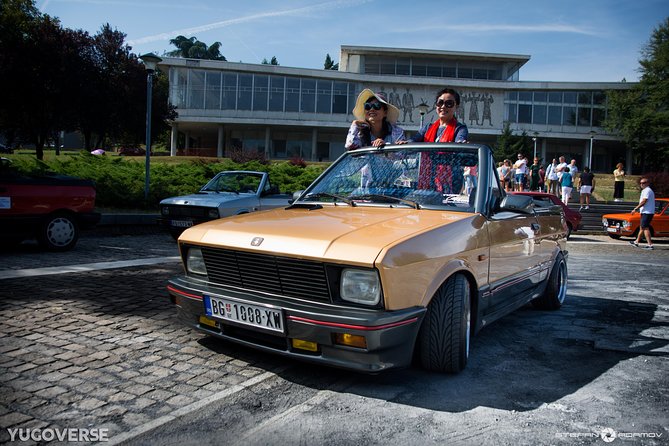
Next comes Palata Srbije, which is described as the largest and most spectacular masterpiece of modernist architecture in Belgrade. Modernism in this city context can feel like a time capsule, but in a useful way. You see concrete and form built for a specific era’s idea of progress.
The tour gives you history, and you also get a peek at the inside through pictures, since the interior is listed as closed to the public. This is an important detail for managing expectations. You are not just looking at an exterior facade and guessing what is inside. The guide’s job is to help you visualize what is off-limits.
Admission is listed as free here, and the stop time is about 20 minutes. That is enough time to get the story and still keep your energy for the bigger exterior structure views later.
Potential drawback: if you are the kind of traveler who wants inside access, this stop may feel a little frustrating. You do not control the closure, and you cannot force a private entrance. The good part is that you get interpretive context and imagery, so the closure is not a total loss.
Western City Gate, Genex Tower Brutalism and the Revolving Restaurant Detail
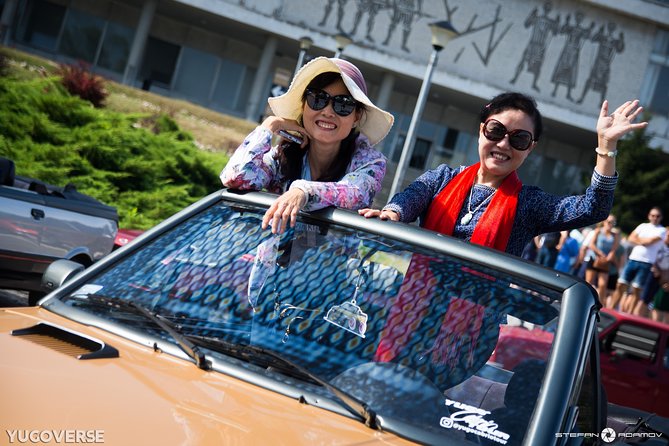
Now we hit one of Belgrade’s signature architectural personalities: the Western City Gate, also known as the Genex Tower. It is a 36-storey skyscraper designed in 1977 in the brutalist style. Even if you do not know the term, you will recognize the look, the heavy structure language, and the clear shapes.
What makes this building interesting in tour terms is how it is formed. It is made of two towers connected with a two-storey bridge, and it has a revolving restaurant at the top. That combination of brutalist massing with a moving, social top space is exactly the kind of design contrast people talk about.
The tour notes it is a real treat for brutalism lovers. But you do not have to be an architecture nerd to enjoy it. This stop works because it is visual and instantly recognizable. You can look up, then relate what you see to the broader Tito-era idea of modern life, where grand forms and public experiences were part of the same cultural package.
Since the stop is presented as a view-and-learn moment, plan for a shorter time rather than a full photo marathon. The upside is that you get the explanation fast, so you can look at the building with better understanding in less time.
Museum of Yugoslavia, Gifts to Tito and Why This Museum Feels Different
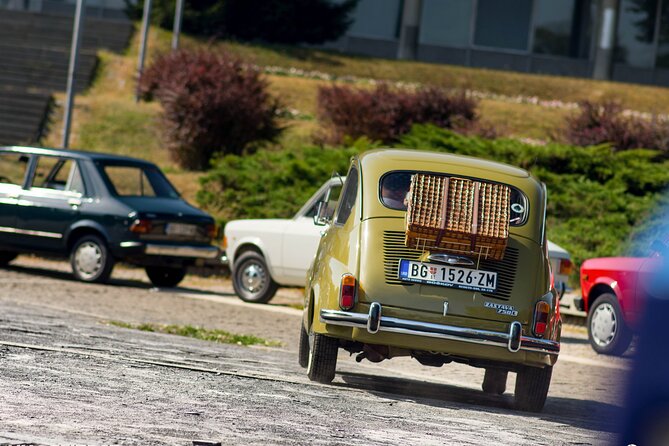
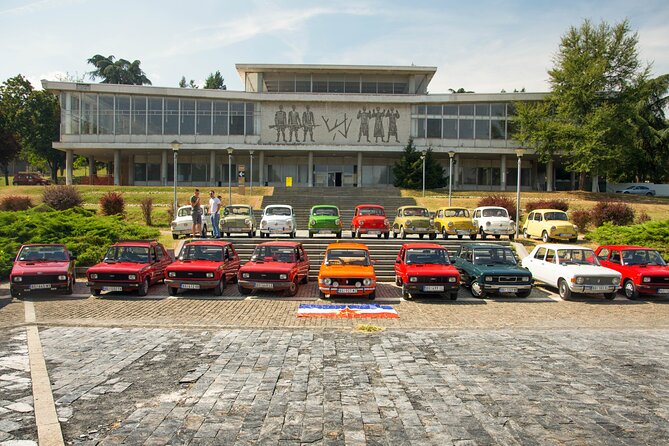
Finally, you shift from buildings to objects at the Museum of Yugoslavia. This is not described as a typical history museum, and that difference matters. The museum is built around collecting gifts that Tito received, starting in 1962. Those gifts came not only from Yugoslavia, but from world leaders as well.
That focus shapes the whole vibe. Instead of a timeline that marches forward with dates, you get a museum model organized around things people gave, which turns diplomacy into material culture. After Tito’s death, the museum was merged with multiple sites: the House of Flowers, the Residence, the Pool House, the Hunting Lodge, the Old Museum, plus the tomb of Josip Broz. The museum is therefore not just one building, it is an ensemble of spaces tied to Tito’s life and legacy.
The scope is huge. The information says there are over 200,000 items categorized into 20 collections. Even if you only spend part of your time there, the sheer scale sets the context. It is also a reminder that this museum is not a small display. It is the kind of place where you could keep reading for days if you had the time and attention.
Your tour time at the museum is about 40 minutes, and admission is included. That means you will likely focus on what the guide prioritizes, rather than trying to cover everything. I think that is the right approach for most people. If you go in trying to see all 20 collections, you risk missing the best stories. Let the guide steer you to the parts that connect most directly to cars, power, and the era’s mindset.
The Yugo Factor, Car Stories You Can Actually Use
The heart of the tour is the vintage Yugoslav car component, centered on learning about the Yugo, including the convertible. The Yugo’s reputation makes it an easy entry point, because people have strong opinions about it. But the point of a good guide is to translate opinion into context.
What I like about car-focused tours like this is that they bring everyday engineering into the discussion. Cars are not just luxury items. They show what a society wanted people to have, what it could produce, and how it talked about modern life. The guide’s route through places associated with Tito and state power gives that car story something physical to land on.
You do not have to be a mechanic to enjoy this part. If you can appreciate design choices and cultural messaging, you will get something from it. And if you do care about cars, you will get the extra satisfaction of understanding how a single model connects to the bigger Yugoslav identity.
Who Should Book Tito and History Vintage Car Tour
This tour is a good match for:
- People who like Belgrade beyond the basics, especially the era behind Tito
- Travelers who enjoy cars as a way to understand culture, not just as vehicles
- Anyone who likes architectural variety, royal residence, modernist palace forms, and brutalist towers
- Small-group travelers who want a private guide and do not want to coordinate tickets on their own
It might not be ideal if:
- You want lots of long museum time, or a full car showroom experience
- You dislike walking and short outdoor viewing stops
- You want a pure automotive tour with deep technical specs, instead of city context and storytelling
The sweet spot is a traveler who likes mixing three things: political history, design, and the odd charm of a car with a controversial reputation.
Should You Book This Tour?
Yes, I would book it if you want a Belgrade experience that feels specific. The combination of vintage Yugoslav car stories, clear site-based stops, and admission included at the Museum of Yugoslavia makes the $144 price feel more like a package than a gamble. The snacks and soda are also a small detail that make the ride nicer, especially if your day is already packed.
I would also book it if you enjoy hearing how one topic connects to another. Here, the Yugo is not treated as isolated trivia. It is used to interpret a whole era, using Belgrade’s landmarks as your classroom.
If you want a slower, inside-heavy tour, you might choose something else. But if you like a tight, well-directed 2 to 3 hour loop with memorable stops, this is the kind of tour that can turn a single car name into a real sense of place.
FAQ
How long is the Tito and History Vintage Car Tour?
The tour lasts about 2 to 3 hours.
What is the price for this private tour?
The price is listed as $144.
Is pickup available?
Pickup is offered if you request it, otherwise you can go to the meeting point.
Where is the meeting point?
The start location is Dragoslava Jovanovića 14, Beograd 11000, Serbia.
Is this tour private or shared with other groups?
This is a private tour/activity, so only your group participates.
Does the tour include admission tickets?
All fees are taken care of, and admission to the Museum of Yugoslavia is included. Other stops listed also show free admission.
What stops are included?
You visit places including the House of the National Assembly of the Republic of Serbia, Park of Friendship, Palata Srbije, Western City Gate (Genex Tower), and the Museum of Yugoslavia.
What happens if the weather is poor?
The experience requires good weather. If it is canceled due to poor weather, you will be offered a different date or a full refund.
How flexible is cancellation?
You can cancel for free up to 24 hours in advance for a full refund.
The Rest of the Serbian Shortlist
Everything We Have Reviewed in Serbia
Tito, Concrete and the Old Republic
Just Reviewed in Serbia
- Private Half Day Serbia Tour Novi Sad and Petrovaradin Fortress★ 5.0 · 3 reviews
- Private Wine Tasting by Party in Belgrade★ 5.0 · 3 reviews
- Belgrade: The White Emigration in Serbia in the Wake of the Russian Revolution★ 5.0 · 3 reviews
- Zica and Studenica monastery From Belgrade★ 5.0 · 3 reviews
- Feel Belgrade Welcome tour★ 4.5 · 3 reviews
Belgrade Communist & Yugoslav History Tours, side by side.
 ★ 5.0Red Belgrade Communist TourFrom $5378 reviews
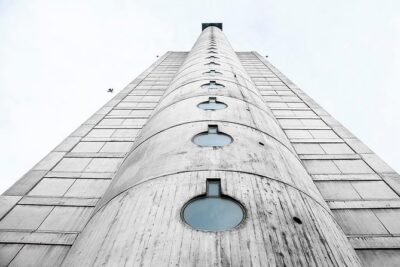 ★ 4.5Architecture of New Belgrade – Brutalism DecodedFrom $8624 reviews
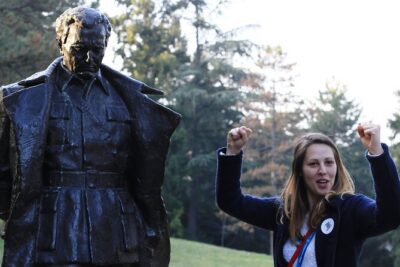 ★ 4.5Communist Tour in BelgradeFrom $2419 reviews
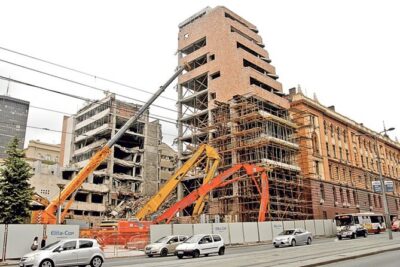 ★ 5.0NATO Bombing of Belgrade Historical TourFrom $6917 reviews
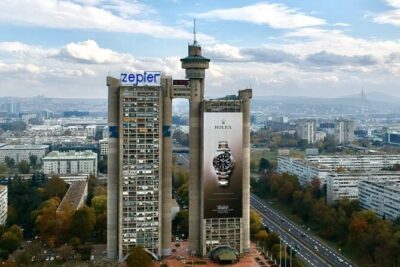 ★ 5.0E-Scooter Communist Yugoslavia TourFrom $4815 reviews
 ★ 4.5NATO Bombing of Belgrade Private TourFrom $14511 reviews
 ★ 5.0E-Scooter Belgrade Hooligans TourFrom $487 reviews
 ★ 5.0Eat Like Tito – Gastro Historical ExperienceFrom $1274 reviews
Also on these Serbia lists