
REVIEW · BELGRADE
NATO Bombing of Belgrade Private Tour
Belgrade changes when you slow down. This private tour puts you at the real places hit in 1999 and explains what those blasts meant for civilians and the country that lived through them. You’ll move site by site, short stops, clear context, and enough time to ask questions.
I really like two things here: the site-by-site storytelling at five major locations, and how the guide uses visual context (photos and comparisons) to make sense of what you are actually seeing on the street. I also appreciate the convenience of hotel pickup and drop-off, plus bottled water so you can focus on the route, not logistics.
One drawback to consider is the tone. This is heavy material about deaths and civilian damage, so it is not the type of tour you do to relax. If you prefer light, cheerful sightseeing, you might find the subject matter emotionally intense.
In This Review
- Key highlights you should know before you go
- Why This Belgrade Route Hits Different
- Price and What You Actually Get for $145.10
- Pickup, Start Time, and How the Day Feels in Practice
- Stop 1: RTS and the Zašto? Monument at Radio Television of Serbia
- Stop 2: The Ministry of Defence, a Visual NATO Reminder
- Stop 3: Ušće Business Center and the Communist Party Headquarters Shell
- Stop 4: Chinese Cultural Center, the Embassy Site That Still Raises Questions
- Stop 5: Air Force Command Building and the 1935 “Pearl” of Architecture
- What Makes This Tour Feel Educational (Not Just Informative)
- Is This the Right Fit for You?
- Should You Book This NATO Bombing of Belgrade Private Tour?
- FAQ
- How long is the NATO Bombing of Belgrade private tour?
- What time does the tour start?
- Is hotel pickup and drop-off included?
- Is the tour private, and in what language is it offered?
- Do the stops require paid admission?
- Is free cancellation available?
Key highlights you should know before you go
- RTS and the Zašto? memorial connection: you’ll hear the story linked to the monument and the unrepaired building remaining as a sign of what happened.
- The Ministry of Defence photo-famous reminder: this is one of the most visible NATO bombing references in Belgrade, with a direct explanation of its impact on both military targets and nearby civilian buildings.
- Ušće’s Communist-era skeleton: you’ll look at the former Central Committee structure and learn why it was designed to be missile-resistant, and why it became a target.
- The Chinese Cultural Center controversy: a former Chinese embassy site with a difficult backstory and the deaths of four Chinese citizens mentioned for that night in 1999.
- Air Force Command building, 1935 architecture with wartime purpose: you’ll finish with a strategic site tied to the pilots who defended the sky above Serbia and Yugoslavia.
The Yugoslav decades, told on the street
Why This Belgrade Route Hits Different
This tour works because it is not trying to be a film or a lecture. You travel through the city in a focused loop and stop only where the story is anchored in something you can see. That is what makes it feel real. A lot of Belgrade’s 1999 events are discussed in general terms, but here you are standing close to the edges of those events, with a guide walking you through why certain places were hit.
It also helps that the stops are short and paced. Each location is about 30 minutes, which means you get coverage without dragging you through hours of waiting. You keep momentum, and you can absorb each location as its own chapter.
Finally, the tour is built for conversation. It is a private tour, so you are not stuck listening politely through the entire drive. If you care about how targets were chosen, why certain buildings were designed to resist attack, or what life meant for people in the city, you’ll get more out of the experience.
Price and What You Actually Get for $145.10
At $145.10 per person, this is not a budget group shuttle. You are paying for a private guide/driver and dedicated hotel pickup and drop-off. That matters in Belgrade because you save time and stress, and you avoid the constant question of how to get from one sensitive site to the next without losing your day.
It’s also practical value because the tour includes bottled water and the stops have free admission. So you do not get hit later with ticket costs for each location. The price is essentially paying for transportation plus interpretation, and if history is your interest, that is where your money goes.
What is not included is what many people quietly forget to plan for: food and drinks. The tour is only 3 to 4 hours, but if you are out before a meal or traveling from a cruise or another schedule, grab a snack or plan water beyond what’s provided.
Pickup, Start Time, and How the Day Feels in Practice
The tour starts at 10:00 am. If you want pickup from a different address than the listed options, you can specify it (like an Airbnb or apartment). The tour can also pick you up from the Belgrade port where cruiser boats dock, which is a big deal if you are on a tight port schedule.
During the drive between stops, you are not just sitting in transit. The guide is using the time to place each site in context so the route feels like one story rather than five unrelated points. That approach is a big part of why people find the tour very educational.
If you want the best experience, show up ready to walk a bit around each site area. Comfortable shoes help, even if none of the stops require long hiking. And since each stop is only about half an hour, it helps to come with a few questions in mind.
Just your group and the guide
- Private Red Star-Partizan Stadium Tour in Belgrade
★ 5.0 · 72 reviews - Belgrade Private City Tour
★ 5.0 · 41 reviews - Private Day Tour to Fruska Gora Monasteries, Sremski Karlovci and Novi Sad
★ 5.0 · 34 reviews
Stop 1: RTS and the Zašto? Monument at Radio Television of Serbia
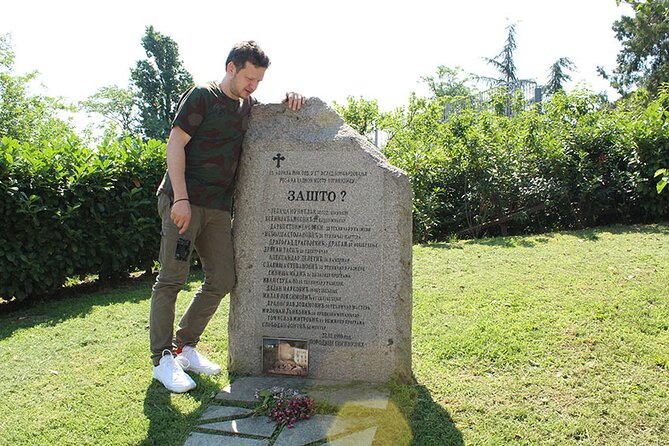
Your first stop after pickup is the RTS, Radio Television of Serbia building area. Right away, you encounter a monument called Zašto? (Why?), and this is where the tour becomes emotionally direct. You’ll hear a disturbing story connected to the night shift when 16, mostly young people were killed. The tour explains how the site remains marked, including the fact that the original building on the area is still standing and unrepaired, serving as a memorial.
Why this stop matters: TV and media buildings are not just physical targets. They represent information, daily life, and normal routines. When you stand there, you understand why this kind of event stays in collective memory. It is not abstract. It is part of the city’s skyline and its institutional identity.
What to watch for: listen carefully to how the guide links the story to what you can see now. The goal is not to re-create the night. It is to help you connect the past to the present in a respectful way.
Time and entry: the stop is about 30 minutes, and admission is free.
Stop 2: The Ministry of Defence, a Visual NATO Reminder
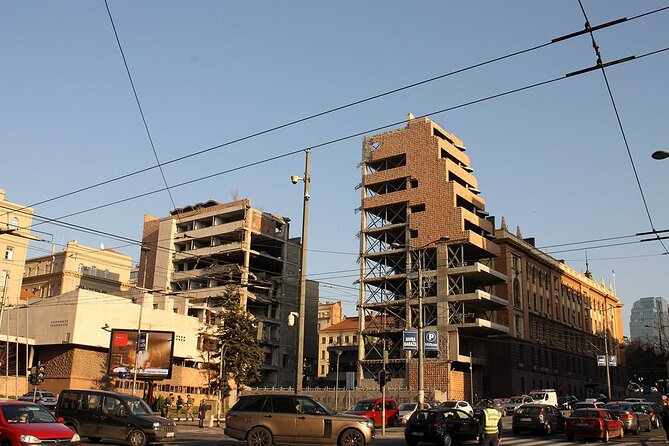
Next you head to the Ministry of Defence area, one of the most commonly photographed sites tied to NATO bombing in Belgrade. This stop is especially strong if you like seeing how history is built into the cityscape.
Here’s the key context you’ll get: the Ministry of Defence is presented as a reminder of the night of 29 April 1999, when many military objectives were hit. The guide also covers the immediate consequence, including that one person lost their life and many civilian buildings nearby were damaged.
Why you’ll enjoy this stop even if you have visited Belgrade before: Belgrade has plenty of monuments and museums, but this is the kind of place where you learn how wartime action leaves a trace in ordinary neighborhoods. The Ministry of Defence is a clear focal point, but the story expands outward into civilian impact.
Possible drawback: because this is a heavily associated site, it can feel intense even before you start listening. If you need a gentler pace, remind yourself the tour is structured to move forward after each chapter, so you do not get stuck in only one emotional moment.
Time and entry: about 30 minutes, and admission is free.
Stop 3: Ušće Business Center and the Communist Party Headquarters Shell
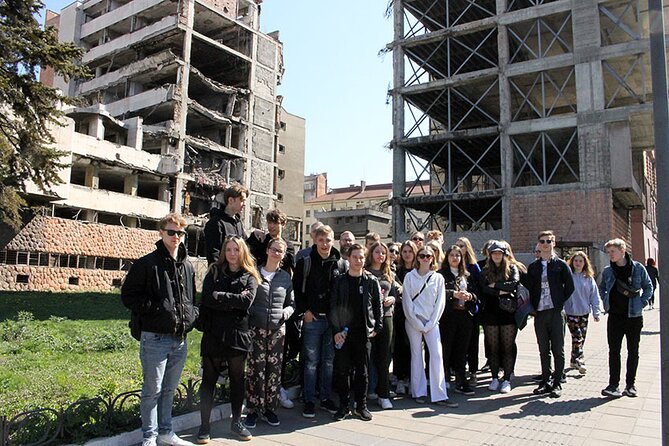
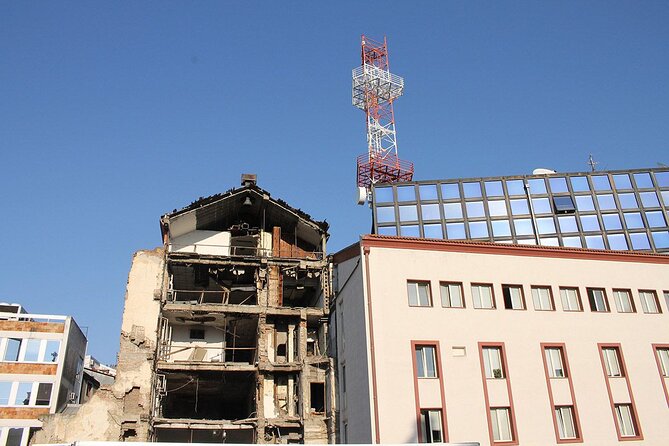
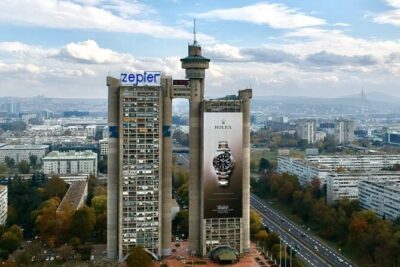
Your third stop is Poslovni centar Ušće, now a business center, but it sits on the former Central Committee of the Communist Party of Yugoslavia building site. You’ll notice the building’s “skeleton” quality, and the tour explains how it looks much like the original structure’s appearance.
This stop’s most interesting angle is the question the guide pushes you to consider: why was this building missile proof back in 1999, and why did NATO still hit it? That is a great example of how the tour avoids simple stories. You are not only learning what was attacked. You are learning about the logic behind the target selection and what “protection” meant in that era.
Why this matters for your understanding of 1999: it forces you to connect engineering choices to wartime decisions. Buildings were designed for specific threats. Targets were chosen based on military value and strategic impact. The tour helps you see that these were not random hits.
Time and entry: about 30 minutes, and admission is free.
Stop 4: Chinese Cultural Center, the Embassy Site That Still Raises Questions
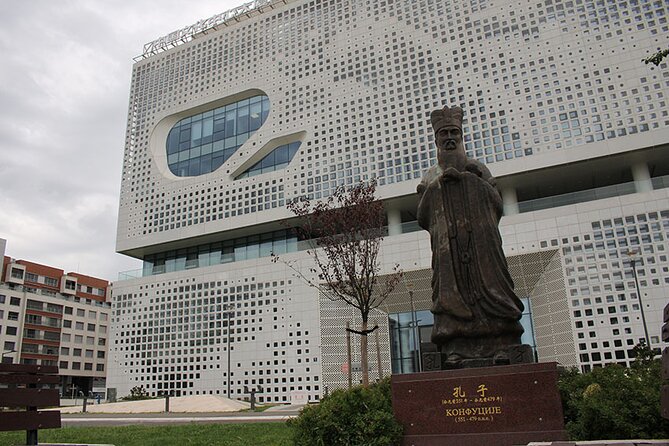
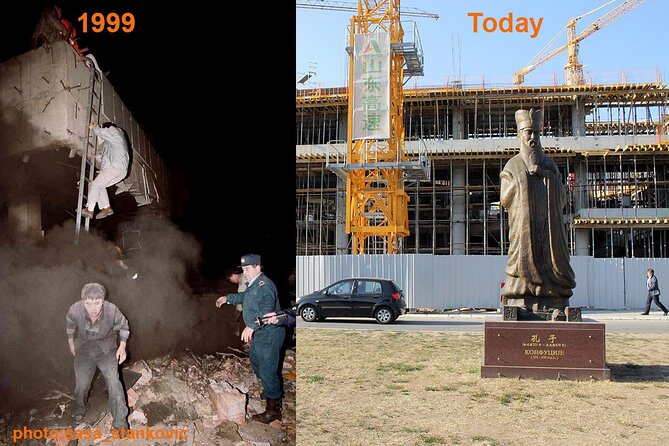
Then you go to the Chinese Cultural Center, a former Chinese embassy site and one of the most controversial bombing locations from the 1999 campaign. The tour explains that the embassy was allegedly bombed due to an intelligence mistake, while also noting there are suspicions it had a different purpose.
Most important, the guide covers the human cost tied to the event: four Chinese citizens died on the night of 7 May 1999.
Why this stop is so memorable: it highlights how war reaches beyond a single side. This is not only about Serbian experience. It is also about international tragedy and the long shadow of uncertainty around what happened and why.
How to get the most out of this moment: stay open to the complexity. The tour presents the controversy without turning it into a guessing game. It gives you enough context to understand why people debate the details, and why the site remains significant.
Time and entry: about 30 minutes, and admission is free.
Stop 5: Air Force Command Building and the 1935 “Pearl” of Architecture
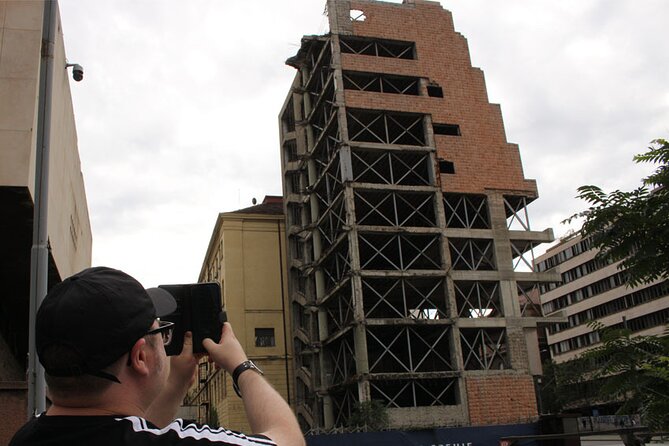
Your final stop is the Air Force Command building, a 1935 edifice described as a high point of Yugoslavian and Serbian architecture. This is where the tour shifts slightly from civilian impact to air defense and strategic defense choices.
The key date here is 5 April 1999, when the building was hit with two missiles. You’ll hear how the guide connects this location to the pilots who knowingly engaged in the fight and lost their lives defending the sky above Serbia and Yugoslavia against a much stronger NATO air force.
Why I think this ending works: it gives you a clearer sense of what each site represented in the bigger picture. Earlier stops focus on media, defense, and other targets tied to governance and infrastructure. Here, the story becomes more direct about military air defense and the human stakes for those missions.
Time and entry: about 30 minutes, and admission is free.
What Makes This Tour Feel Educational (Not Just Informative)
The tour earns its strong rating because it combines three things that are hard to balance in a short, private experience:
First, you get clear structure. Each stop is a chapter, and each chapter has a date, a purpose, and a consequence you can carry forward.
Second, you experience the power of pictures and on-site comparison. Even if you already know the general story of NATO bombing in 1999, you will likely see the city differently after connecting photos and descriptions to what you can stand next to today.
Third, you spend time driving through the city with explanation, not just sitting. That helps you keep context while you move between sites. Belgrade is not compact in every direction, and your brain needs help tracking where everything sits relative to everything else.
Is This the Right Fit for You?
This tour is a strong match if:
- you like history that you can read on streets and buildings, not only in books
- you want a guided route that connects dates to real places
- you prefer private conversation and a paced schedule
It might not be your best choice if:
- you want a light, casual sightseeing day
- you do not handle war-related stories well
- you are looking for museum-style time, because this is designed for five short stops rather than long indoor exhibitions
One practical note: bring a bit of emotional space. This tour deals with death and destruction. Even when the facts are presented carefully, the topic itself stays serious.
Should You Book This NATO Bombing of Belgrade Private Tour?
Yes, if your goal is to understand how 1999 events landed in specific corners of Belgrade, and you value a guide who can make you see the logic behind the attacks. The best reason to book is the way the experience stays grounded in free-entry sites and concrete storytelling, with the convenience of hotel pickup and a private pace.
If you are sensitive to heavy historical topics, consider whether you want a different style of tour for your trip. But if you can handle serious subject matter, this route is a focused way to learn, and it is priced reasonably for what you receive: private guidance, dedicated transport, and interpretation at five major locations, all within a half-day window.
FAQ
How long is the NATO Bombing of Belgrade private tour?
It lasts about 3 to 4 hours.
What time does the tour start?
The start time is 10:00 am.
Is hotel pickup and drop-off included?
Yes. Hotel pickup and drop-off are included.
Is the tour private, and in what language is it offered?
It is a private tour, and it is offered in English.
Do the stops require paid admission?
The stops listed on the route show free admission.
Is free cancellation available?
Yes. You can cancel up to 24 hours in advance for a full refund. After that window, the amount paid is not refunded.
The Rest of the Serbian Shortlist
Everything We Have Reviewed in Serbia
Tito, Concrete and the Old Republic
Just Reviewed in Serbia
- Private Half Day Serbia Tour Novi Sad and Petrovaradin Fortress★ 5.0 · 3 reviews
- Private Wine Tasting by Party in Belgrade★ 5.0 · 3 reviews
- Belgrade: The White Emigration in Serbia in the Wake of the Russian Revolution★ 5.0 · 3 reviews
- Zica and Studenica monastery From Belgrade★ 5.0 · 3 reviews
- Feel Belgrade Welcome tour★ 4.5 · 3 reviews
Belgrade Communist & Yugoslav History Tours, side by side.
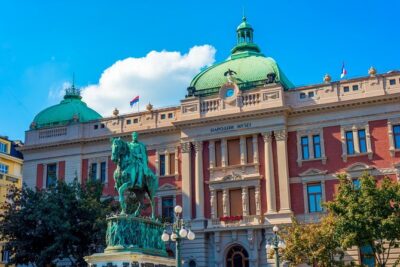 ★ 5.0Red Belgrade Communist TourFrom $5378 reviews
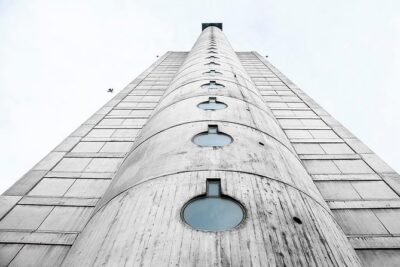 ★ 4.5Architecture of New Belgrade – Brutalism DecodedFrom $8624 reviews
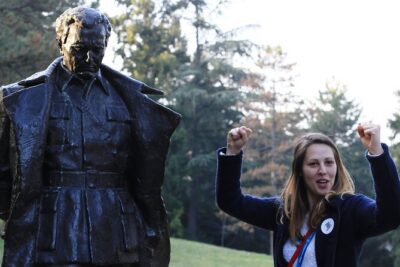 ★ 4.5Communist Tour in BelgradeFrom $2419 reviews
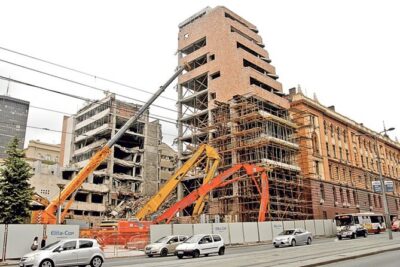 ★ 5.0NATO Bombing of Belgrade Historical TourFrom $6917 reviews
 ★ 5.0E-Scooter Communist Yugoslavia TourFrom $4815 reviews
 ★ 5.0Tito and History Vintage Car TourFrom $14411 reviews
 ★ 5.0E-Scooter Belgrade Hooligans TourFrom $487 reviews
 ★ 5.0Eat Like Tito – Gastro Historical ExperienceFrom $1274 reviews
Also on these Serbia lists