
REVIEW · BELGRADE
Belgrade Big Tour: Top Attractions and Belgrade Neighborhoods
Belgrade in one day, and it actually fits. This tour works because it strings together three Belgrade faces you would otherwise struggle to coordinate: old fort views, Danube-side neighborhoods, and the city’s big religious and government landmarks, all in an air-conditioned ride.
I love the way the Belgrade Fortress area frames the Sava and Danube meeting in one look. I also love that St. Sava Temple entry is included, so you do not waste time on ticket logistics during the biggest stop of the day.
One drawback to plan for: it is a hills-and-cobbles kind of route, with moderate walking and steps in places, so comfortable shoes matter. If you are sensitive to uneven ground, you may feel it more than you expect.
In This Review
- Key things I would not skip
- Price and what you actually get for about $72.59
- First stop: Kalemegdan Park and the Belgrade Fortress viewpoints
- Pobednik, gates, and the Sava promenade before the city modernizes
- New Belgrade’s big concrete buildings: Socialist-era to today
- Zemun on the Danube: old streets, fish restaurants, and Gardos Hill
- The Millennium Monument views, then lunch time in Old Zemun
- Dedinje mansions and Rajko Mitić Stadium: Belgrade’s luxury and sports energy
- Saint Sava Temple and the grand squares of central Belgrade
- Getting the most out of your day: walking pace, photos, and smart breaks
- Should you book Belgrade Big Tour?
- FAQ
- How long is the Belgrade Big Tour?
- What time does the tour start, and how does pickup work?
- Is transport included, and is it air-conditioned?
- What admissions are included in the price?
- Is Millennium Tower admission included?
- How much walking should I expect?
- Where does the tour end?
Key things I would not skip
- Fortress gates and river confluence: Leopold’s Gate, Zindan Gate, Despot’s Gate, and classic panorama views from Kalemegdan.
- Two Orthodox churches inside the fortress: St Petka Chapel and Ružica Church, both built into the fortress complex.
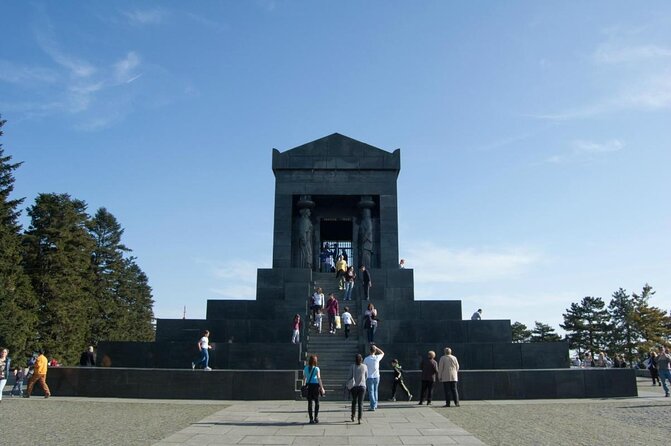
- Pobednik and the Sava promenade: a photo-friendly start that keeps you oriented before you leave the hill.
- Zemun on Gardos Hill: cobblestones, church views, and a chance to breathe in the Danube vibe at street level.
- New Belgrade’s socialist-era modernism: you see big named buildings, not just vague skyline photos.
- St Sava Temple as the anchor stop: massive scale plus a ticket included, and it is timed into a long-but-doable day.
The big Belgrade sweep, other versions of it
Price and what you actually get for about $72.59
At about $72.59 per person for roughly 7 to 8 hours, this tour is priced like a practical “see a lot, miss less” day. You get hotel pickup, transport by air-conditioned van or minibus, a professional English-speaking guide, and the admission fee for Saint Sava Temple.
That temple inclusion matters. It is the kind of landmark you will want to spend real time inside, not rush past because you are juggling tickets. And the route is dense enough that, for a first timer or a short-stay visitor, you can feel confident you are covering the core Belgrade story in one go.
The main value question is simple: do you want guidance through multiple neighborhoods in a single day? If yes, the cost feels fair. If you prefer to wander slowly with no schedule, you may find the day packed.
First stop: Kalemegdan Park and the Belgrade Fortress viewpoints
Your day starts with hotel pickup and quick movement to the Kalemegdan area, the city’s oldest and largest central park. This is where Belgrade’s rivers become real. As you walk near the fortress, you get that classic “how did two rivers end up here” feeling, with the Sava and Danube confluence unfolding from above.
Inside the fortress walls, you see the layered history in stone and street layout. You pass remains from the Roman era, associated with Singidunum, and then medieval defenses like Zindan Gate and Despot’s Gate. The fortress is not just a single view. It is a walk through defensive architecture, including Jakšića Tower and the Leopold’s Gate area where the route kicks off.
You also get two meaningful church stops in the fortress zone: the Chapel of St Petka and Ružica Church. Even if you are not a deep religious-history person, it helps to see these particular buildings in their original setting, not as a random detour.
Pobednik, gates, and the Sava promenade before the city modernizes
After the fortress climb and church time, the tour shifts back into “Belgrade landmarks” mode. You move through the Upper Town and then pick up the Pobednik monument, a striking Victor figure by Ivan Meštrović that Belgrade uses as a shorthand for national pride.
From there, the walk keeps you connected to the river. You pass points like the Roman well and the King’s gate, then continue toward the Sava promenade. It is a good stretch for photos because you are not just looking at buildings, you are looking across water, with the city’s energy laid out behind it.
The route includes details that make the city feel specific: the Damat Ali Pasha Tomb, the Clock Gate and Clock Tower, and a stop back in Kalemegdan Park where you can see Meštrović’s Monument of Gratitude to France and busts of Serbian literary figures. Then you hop back into the vehicle, because next comes the neighborhood shift.
- Northern Serbia: Sremski Karlovci and Novi Sad Full-Day Tour from Belgrade
★ 5.0 · 425 reviews - Day Trip from Belgrade: Gems of Eastern Serbia
★ 5.0 · 424 reviews - Belgrade Nightlife Bar Pub Club Crawl with Drinks
★ 5.0 · 277 reviews
New Belgrade’s big concrete buildings: Socialist-era to today
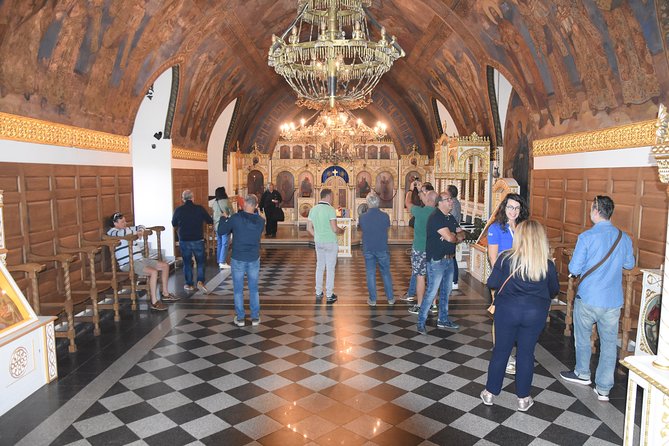
Once you leave the fortress behind, you get to see the side of Belgrade that many short visits miss. New Belgrade is modern, planned, and built up after World War II through the socialist period. The design language can feel very “era-specific,” and that is exactly why it is worth including.
You will see major named structures in the vehicle and at photo stops. This includes the Ex-Central Committee of the Communist Party, the Federal Executive Council (also known as the Palace of Federation), and landmarks tied to the Genex complex like the Genex Tower or Western Gate of Belgrade. You also pass the Sava Center, one of Europe’s biggest congress halls in this area.
If you enjoy architecture as a theme, this part is a treat. Even the fact that the New Belgrade concrete-utopia angle was recognized by a New York museum with an exhibition called Toward a Concrete Utopia gives you a reason to pay attention beyond selfies.
The tour also adds lighter pop-culture flavor in the form of the restaurant Novak, linked to Novak Đoković’s family, and you finish this modern stretch near Belgrade Arena, a top sports venue in the area.
Zemun on the Danube: old streets, fish restaurants, and Gardos Hill
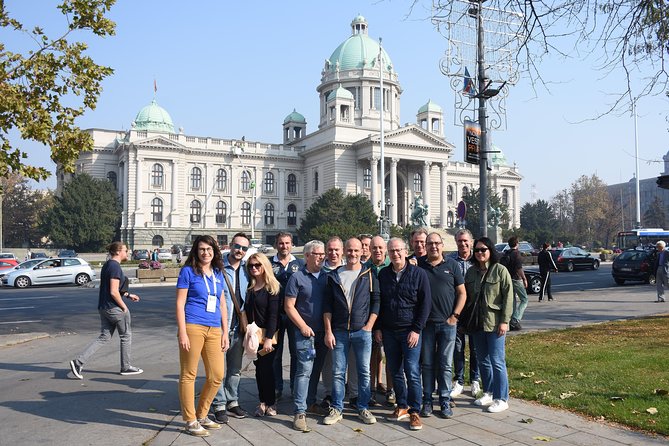
After New Belgrade, the tour heads north to Zemun, which feels more Central European than the rest of Belgrade. You start with the area around Avijatičarski Trg, where the square anchors the neighborhood’s WWII memory with a massive monument to the heroes. Nearby, you also see the Air Force Ministry, described as a strong example of modernism in pre-war Yugoslav architecture.
Then you ride and walk along Gospodska Street, where the architecture gives you variety: you can spot the Post Office, Hotel Central, the Town Museum, and the House with a Sundial. The point here is not one perfect building, it is the sense that Zemun’s streets have a distinct older character you cannot recreate by looking at the skyline from across the river.
At the Danube bank, you get the Zemun Promenade. This is where many traditional fish restaurants operate under century-old plane trees, so the atmosphere is shady and old-school. The tour keeps moving, though, and you will pass the oldest Orthodox church of St Nicholas from the 17th century before tackling Gardos Hill.
The Millennium Monument views, then lunch time in Old Zemun
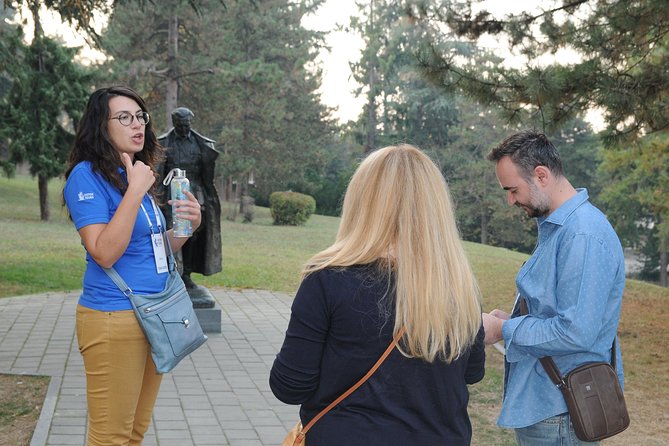
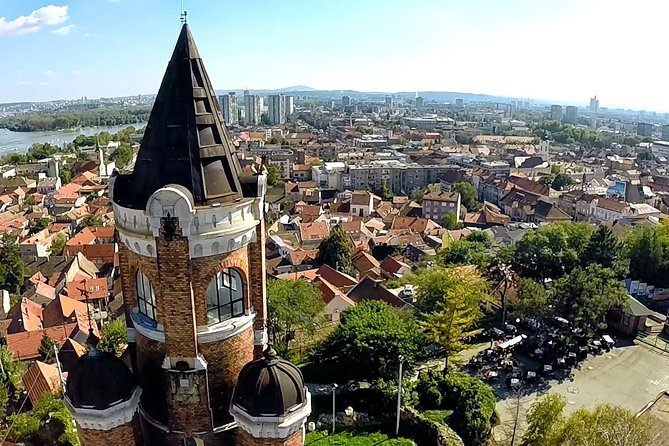
Gardos Hill is where Zemun turns into a viewpoint town. You reach the top and see the remains of the old citadel along with Zemun’s central landmark, the Millennium Tower. It was built in a mix of historical styles in the late 1800s to mark the southernmost point of the Austro-Hungarian Empire, which gives the view extra context.
There is a practical detail here: Millennium Tower admission is not included. So if you want that top-level panorama, you may need a separate ticket. Even without paying for extra access, the hill already gives you strong views down over Old Zemun, and across toward the river confluence and the Belgrade Fortress side of the story.
From the hill you head back to the Main City Square, where a daily market runs. The area is ringed with older buildings, including the Bishop’s Office and the Roman Catholic Church of the Blessed Virgin from the 18th century. Then you get free time that is actually useful. You can grab lunch by the Danube, or choose local favorites like burek or chevapchici. This free block is one of the best times to slow down because the whole day is otherwise scheduled.
Dedinje mansions and Rajko Mitić Stadium: Belgrade’s luxury and sports energy
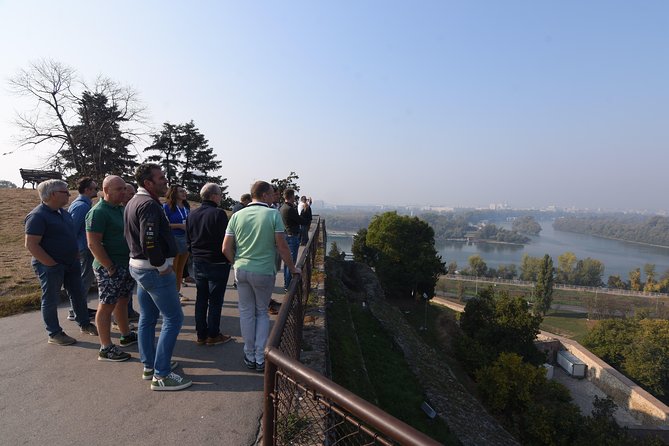
After you finish in Zemun, you cross toward Dedinje. Dedinje is Belgrade’s more luxurious residential area, with mansions tucked into greenery around Topčider Hill. The guide adds history around the properties and what changed during the turbulent 20th century. Even from the vehicle, you get a sense of how Belgrade redistributed power and wealth over time.
This is also where you see Rajko Mitić Stadium, home of Red Star Belgrade. The tour’s framing here is clear: Red Star is described as the last club from Eastern or Southern Europe to win the prestigious Champions League, and the rivalry with Partizan Belgrade is long-running, with their stadium just across a small hill.
This part of the tour is a nice reset. After fortress stone and Zemun cobblestones, you get modern Belgrade again, but in a different tone, with sports culture and high-end neighborhood streets.
Saint Sava Temple and the grand squares of central Belgrade
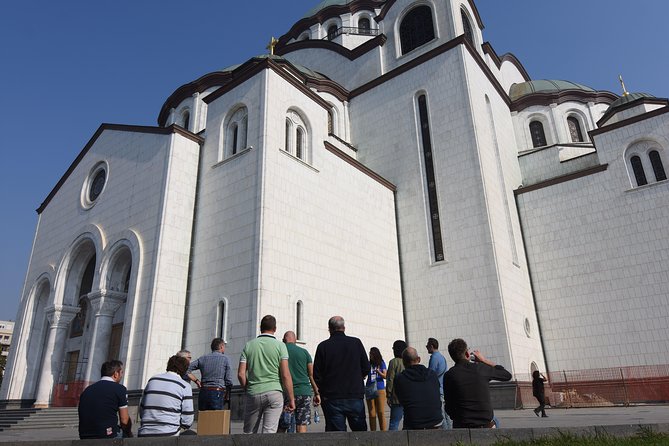
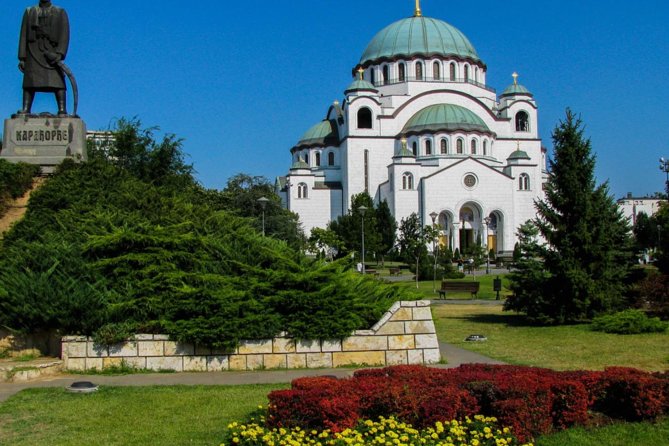
Then comes the centerpiece: the Church of Saint Sava in Vračar. This is one of those places where the scale hits you before you even absorb the details. The temple’s dome is visible from all over the city, and it is built on a site tied to major Serbian Orthodox history, since construction began in the 1930s where Ottoman forces burned the relics of St Sava.
The style is Serbian-Byzantine, and the numbers are huge enough to help you “feel” it even if you do not memorize them. The dome reaches 70 meters, the gilded cross adds 12 meters, for a total height of 82 meters. The building also spreads across ground level plus galleries, with 3,500 m² at the base and 1,500 m² in the first-level galleries.
This is the stop where you really benefit from having the admission fee included. You can focus on the architecture and interior space, not the entry timing.
When you step back outside, the tour continues through Slavija Square and down Nemanjina Street, where you see state institutions with pre-war architecture. You finish the day in the classic photo-and-photo-op zone: Republic Square with National Museum and National Theatre and Opera, plus an explanation of Prince Mihailo and the equestrian monument to Knez Mihajlo. Then you move to Terazije Square, with the white stone fountain and the Moskva Hotel building, pass Nikola Pašić Square, and end at the area in front of the Parliament Building and then the House of the National Assembly.
At the final stop, the guide focuses on what you are seeing around you, including the Old and New Royal Palaces and stories about the dynasties that ruled Serbia across the 19th and 20th centuries.
Getting the most out of your day: walking pace, photos, and smart breaks
This is a long day, so your biggest strategy is comfort. You will do moderate walking, and some parts include steps and cobblestone surfaces. If you know you struggle with hills, plan on going slow at Gardos Hill and on being careful on uneven stone around the fortress.
I also recommend you think about your photo plan. Belgrade’s river viewpoints are spread across multiple stops. If you stop to photograph every gate detail in the fortress and every river angle in Zemun, the day will feel shorter but more exhausting. A smarter approach is to pick your “must-get” angles, then let the rest be memory instead of a frantic camera sprint.
Lunch is where you can actually recharge. The Zemun free time is long enough to sit down, eat, and walk a few extra blocks. Keep it simple. Pick one Danube-area restaurant for fish or choose a local bite like burek or chevapi-style rolls, then return to the group without rushing.
Finally, do not expect a gentle museum day. This tour is about orientation and contrast. That means the best results come when you stay curious about what each neighborhood is doing differently.
Should you book Belgrade Big Tour?
Book it if you are short on time and want a guided loop through Belgrade’s highlights, with real structure. The included St Sava Temple admission, the fortress context, and the full arc from Zemun to New Belgrade make it a strong value day at about $72.59.
Skip it or choose a more flexible plan if you hate walking on hills, feel uneasy on cobblestones, or want a very slow pace with lots of unstructured time. This is a “see a lot, learn fast” format, and it rewards you most when you come ready for a full itinerary day.
FAQ
How long is the Belgrade Big Tour?
It runs about 7 to 8 hours.
What time does the tour start, and how does pickup work?
The start time is 9:30 am. If you book a shared tour, pickup is 15 to 30 minutes before departure. Pickup is available from hotels, Airbnb, or pensions within 5 km of Republic Square.
Is transport included, and is it air-conditioned?
Yes. You travel by air-conditioned van or minibus, depending on group size.
What admissions are included in the price?
The entrance fee for Saint Sava Temple is included.
Is Millennium Tower admission included?
No. Millennium Tower admission is listed as not included, so it is an extra cost if you want to go up.
How much walking should I expect?
Moderate walking is involved, including some steps and hill climbing around fortress and Zemun areas.
Where does the tour end?
The tour ends in front of the National Assembly in the city center.
The Rest of the Serbian Shortlist
Everything We Have Reviewed in Serbia
Belgrade End to End
Just Reviewed in Serbia
- Private Half Day Serbia Tour Novi Sad and Petrovaradin Fortress★ 5.0 · 3 reviews
- Private Wine Tasting by Party in Belgrade★ 5.0 · 3 reviews
- Belgrade: The White Emigration in Serbia in the Wake of the Russian Revolution★ 5.0 · 3 reviews
- Zica and Studenica monastery From Belgrade★ 5.0 · 3 reviews
- Feel Belgrade Welcome tour★ 4.5 · 3 reviews
Belgrade Sightseeing & Panoramic Tours, side by side.
 ★ 4.5Belgrade Sightseeing Half-Day Trip Old and New BelgradeFrom $15071 reviews
 ★ 5.0Nis Sightseeing TourFrom $13850 reviews
 ★ 5.0Belgrade Private City TourFrom $13741 reviews
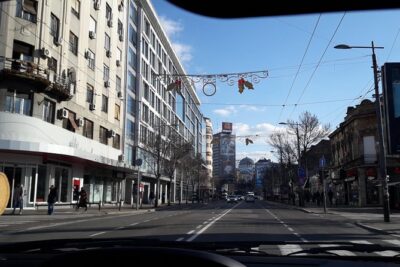 ★ 5.0Belgrade sightseeing by carFrom $7540 reviews
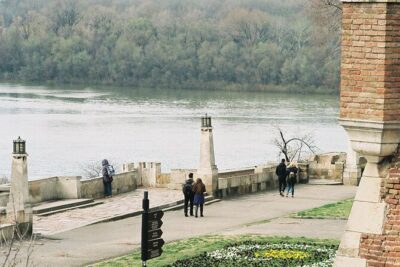 ★ 5.0Half-Day Sightseeing and Walking Tour of Belgrade CityFrom $3837 reviews
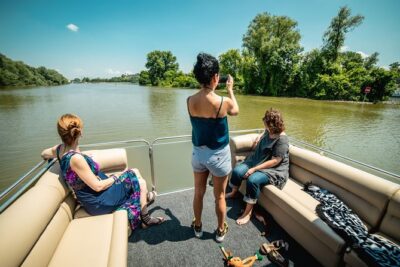 ★ 5.02 hours / Sightseeing Boat cruise Drinks IncludedFrom $10631 reviews
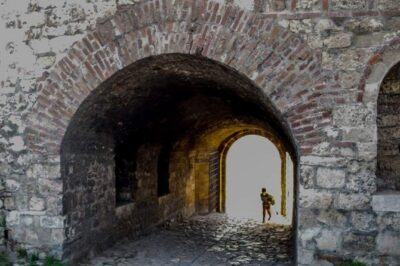 ★ 5.0Get Big Picture of Belgrade at its 2,000 years old FortressFrom $6620 reviews
 ★ 5.0Belgrade City Walk, Gathering and SightseeingFrom $3819 reviews
Also on these Serbia lists