
REVIEW · BELGRADE
Belgrade Sightseeing Half-Day Trip Old and New Belgrade
Belgrade in three hours, minus the guesswork. You get a tight loop through Belgrade Fortress and the Church of Saint Sava, plus New Belgrade’s modern side. The only drawback is the pace is brisk, so if you want long hangs in every spot, you may feel a bit rushed.
This is a true private outing for your group, using an air-conditioned minivan (4 to 7) or a sedan (1 to 3). You start around 9:30 am, with free hotel pickup near Republic Square, and an English-speaking guide who can explain Belgrade’s tough 20th-century story in a way that actually clicks. If you get guides like Aleksandr or Ivan, the vibe tends to be practical, friendly, and photo-focused, even on hot days.
In This Review
- Key highlights worth your attention
- Entering Kalemegdan Fortress, from Roman walls to Orthodox chapels
- Pobednik, old gates, and the upper town viewpoints that frame the city
- New Belgrade’s concrete-to-modern story, from the Palace of Federation to Sava Center
- Dedinje, Topčider Hill mansions, and the football rivalry on two sides
- Tito’s resting place and Yugoslavia on one focused stop
- The Temple of Saint Sava: size, style, and why it dominates Belgrade
- Government streets and royal-era architecture, ending at Republic Square
- Pickup, pace, and what the $150.85 buys you in real terms
- Who should book this Old and New Belgrade route?
- Should you book this half-day Old and New Belgrade tour?
- FAQ
- What time does the tour start?
- How long is the half-day trip?
- Is this a private tour or shared with others?
- What language is the guide?
- What kinds of vehicles do you use?
- What is included in the price?
- Do I pay separately for St. Sava Temple entry?
- Where does pickup happen, and are there extra fees?
- Can I cancel for a full refund?
Key highlights worth your attention
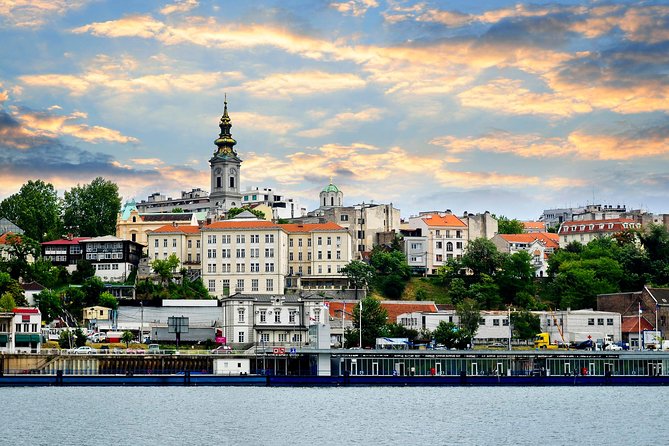
- Kalemegdan Fortress photo views fast, including St Petka Chapel and Ružica Church
- Pobednik and the upper town route, with landmarks tied to both empires and trade
- New Belgrade architecture stops, from the Palace of Federation to Genex Tower and Sava Center
- Dedinje and stadium rivalries, plus a look at top-tier neighborhoods and Topčider Hill
- Tito landmarks on the same ride, Museum of History of Yugoslavia and the House of Flowers
The big Belgrade sweep, other versions of it
Entering Kalemegdan Fortress, from Roman walls to Orthodox chapels
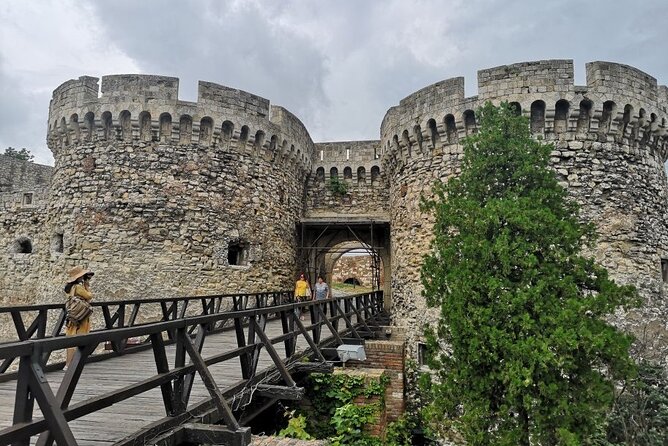
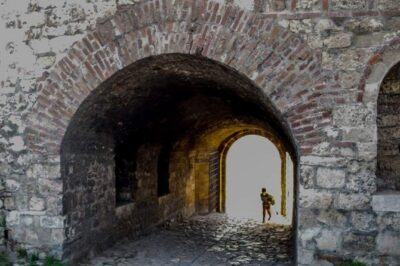
Your tour starts with pickup and then a quick transfer to the historic core. The first real step is Kalemegdan Park, Belgrade’s oldest and largest central park, used today as a viewpoint and a breather between viewpoints. From there, you walk into Belgrade Fortress, starting around Leopold’s Gate.
This is not just a pretty walk. You’ll pass traces of the Roman castrum called Singidunum, then layered medieval defenses built on top of it. The guide points out gates and structures from the 15th century like Zindan Gate, Despot’s Gate, and Jakšića tower, which helps you see the city as something that keeps building over itself.
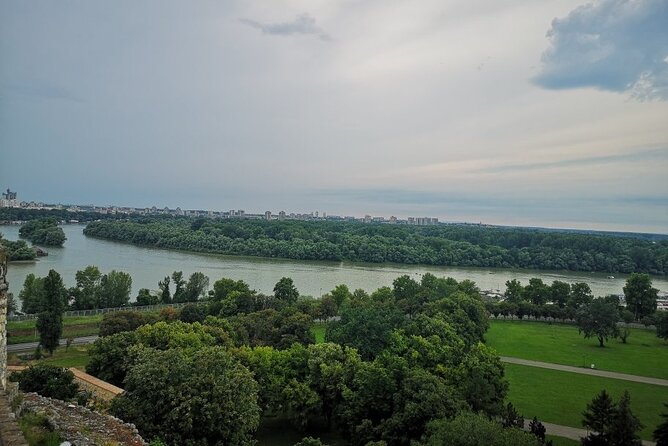
Inside this fortress section, you visit two Orthodox churches: the Chapel of St Petka and Ružica Church (Virgin Mary Church). It’s a short stop, but the setting makes it feel more meaningful than a quick roadside church photo. From the upper town, you also get the headline view: the confluence of the Sava and the Danube.
Pobednik, old gates, and the upper town viewpoints that frame the city
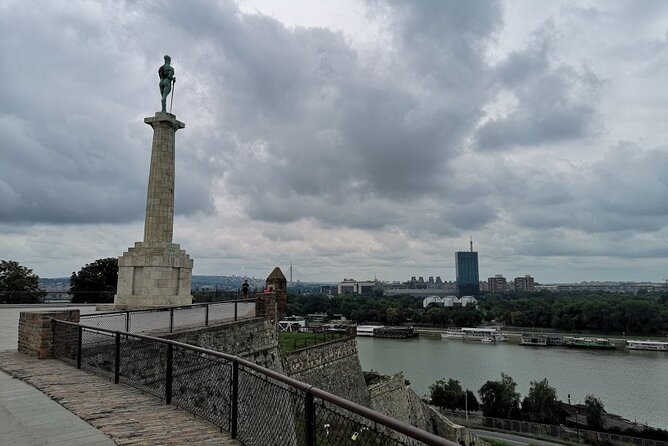
After the fortress churches, the route continues through the upper town highlights by foot, then back to the vehicle. One of the best-known stops here is Pobednik, the Victor monument by sculptor Ivan Meštrović. It’s one of those landmarks you can spot on the skyline and then understand better once you’re up close.
You also pass a cluster of smaller historic points that make Belgrade feel stacked with stories, including the Roman well and the King’s Gate. The route follows toward the Sava promenade and includes the Damat Ali Pasha Tomb, Clock Gate (Sahatkapija), and Clock Tower (Sahatkula). Even if you’re not a history buff, these stops give you a mental map of where Belgrade shifted power and culture over time.
You’ll also see the Military Museum area and go by Istanbul’s Gate (Stambol gate). Then, the tour returns through Kalemegdan Park again, finishing the walking segment with landmarks such as Ivan Meštrović’s Monument of Gratitude to France and assorted busts of Serbian writers and public figures.
New Belgrade’s concrete-to-modern story, from the Palace of Federation to Sava Center
Once you leave the fortress, the tour shifts gears. You’ll drive into New Belgrade, Belgrade’s post-WWII planned area shaped during the socialist period, where the architecture shows off that era’s big ideas about space and function.
Expect to recognize major names as you pass them by: the Ex-Central Committee of the Communist Party and the Federal Executive Council, often referred to as the Palace of Federation. You’ll also hear about Genex Tower, sometimes called the Western Gate of Belgrade, and the Sava Center, which is one of the biggest congress halls in this part of Europe.
There’s a smart cultural touch here, too. The tour notes that MoMA in New York prepared an exhibition titled Toward a Concrete Utopia, centered on New Belgrade’s architecture. Even if you don’t catch the exhibition, it helps you frame what you’re seeing as part of a wider conversation about 20th-century planning.
New Belgrade also mixes older socialist-style brutalist elements with more recent business buildings. For first-time visitors, it’s valuable because it shows Belgrade is not only about fortresses and churches, it’s also about postwar urban thinking. You’ll also pass by the restaurant Novak, owned by Novak Đoković’s family, and then reach Belgrade Arena, a major sports venue.
Half a Serbian day, well spent
- “Golden Standard” Private Half-Day Sightseeing Tour of Belgrade
★ 5.0 · 5 reviews
Dedinje, Topčider Hill mansions, and the football rivalry on two sides
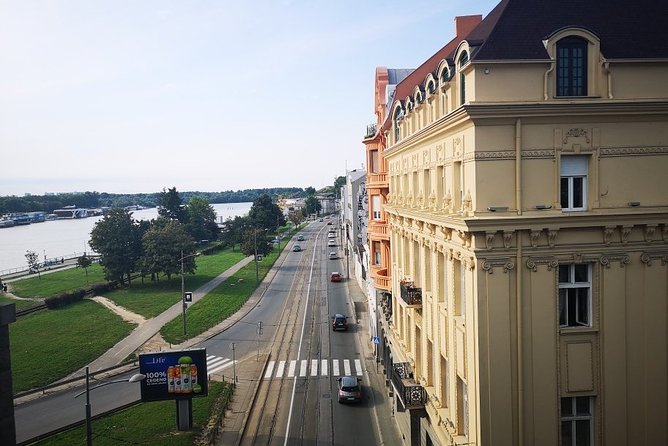
After crossing the Gazela Bridge, the route heads to Dedinje, one of Belgrade’s most luxurious residential areas. Here you’re mainly seeing architecture and neighborhood character from the car, with the guide explaining how these properties fit into the turbulent 20th century. Even from a moving viewpoint, it’s a clear contrast to the fortress area you saw earlier.
The route then ties the neighborhood to sports culture. You’ll spot Rajko Mitić Stadium, home of Red Star Belgrade, and you’ll hear why Red Star is such a big deal internationally, including its Champions League success. The guide also points out the rivalry with Partizan Belgrade, whose stadium sits across a small hill, and the longstanding nature of that competition.
If you follow football at all, this stop is fun because it’s not abstract. It’s a place you can connect to modern life, not just the past. If you’re traveling with teens or sports-minded adults, this segment is often where the tour feels most alive.
Tito’s resting place and Yugoslavia on one focused stop
Next up is a pair of sites that bring the Yugoslav era into sharp focus: the Museum of History of Yugoslavia and the House of Flowers, the resting place of Josip Broz Tito. This is a short stop in the schedule, but it’s significant because it anchors how the region worked during much of the 20th century.
What I like about bundling these in a half-day itinerary is that you get more than just one emotional monument. You also get a sense of how history is curated, remembered, and presented in Serbia today. The guide’s framing can help you understand why these places still matter to Belgrade identity.
If you’re short on time, this is a smart payoff stop. If you want to spend hours here, you might feel the time limit, but the tour is designed as an overview rather than a full museum day.
The Temple of Saint Sava: size, style, and why it dominates Belgrade
No half-day Belgrade plan feels complete without St. Sava Temple. From Dedinje, the tour goes to Vračar to see one of the city’s biggest landmarks, known as the Temple of Saint Sava.
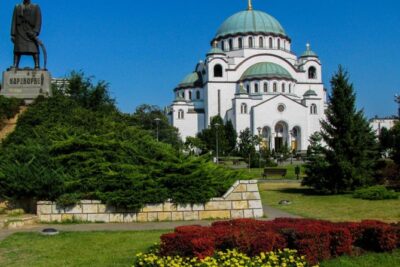
This is the stop where scale becomes part of the story. Construction began in the 1930s, on the site where Ottoman forces burned relics of Saint Sava. The church is in Serbian-Byzantine style, and the dome is a defining feature you can see across the city. The tour also highlights the math of its size: about 3,500 m² of floor area, plus another 1,500 m² in galleries. The dome is about 70 m high, with the gilded cross adding roughly 12 m, for a total height around 82 m.
You’ll also get the lower-level detail: beneath the floor there are vaults and a decorated crypt of Saint Sava. The stop is about 30 minutes, and entrance is included as part of the tour.
For many visitors, this is the most unforgettable moment because it’s both architectural and emotional. Even if churches aren’t your main interest, the dome height and the “visible from everywhere” aspect makes it hard to ignore.
Government streets and royal-era architecture, ending at Republic Square
After the temple, you drive through the central government zone, starting near Slavija Square and down Nemanjina Street, where you’ll see major state institutions. The tour keeps it visual, pointing out examples of pre-war architecture as you travel.
Then you hit a classic photo moment: the House of the National Assembly of the Republic of Serbia. You stop in front for about 10 minutes for pictures and then hear stories about the Old and New Royal Palaces nearby, along with the dynasties that ruled Serbia through the 19th and 20th centuries.
The route continues toward Terazije Square, known for its recognizable 19th-century white stone fountain and the Moskva Hotel. From there, the tour finishes at Republic Square, the heart of the capital. You’ll hear about major cultural buildings around the square, including the National Museum and National Theatre, plus context on Prince Mihailo, a key figure in Serbia’s modern history.
This ending works well because Republic Square is easy to orient yourself after the tour. You’ll also be in a practical location for grabbing food or continuing on your own.
Pickup, pace, and what the $150.85 buys you in real terms
At $150.85 per person, this is not a budget hop. But it’s also not just a sightseeing drive with a few quick photos. What you’re paying for is the full package: free hotel pickup and drop-off (within the defined radius), air-conditioned transport in a small vehicle, a professional English-speaking guide, fuel and parking, a bottle of water per person, and entrance for St. Sava Temple.
That combination matters because Belgrade is spread out. The fortress, New Belgrade, and Dedinje are not next-door to each other, and the tour is built to cover them in a single half-day. I also like that this tour is private for your group, so you’re not fighting for time or waiting on a shared bus schedule.
Do keep expectations aligned with the format. It’s a half-day overview. Even with multiple stops, you’re not going to fully explore every museum or linger forever in each church. Some people may feel the tour is closer to a brisk sprint once you factor driving and photo breaks.
Who should book this Old and New Belgrade route?
I think this tour fits best if you’re one of these:
- First-time visitors who want the big highlights fast, especially Kalemegdan and St. Sava Temple
- Travelers who like context, including Belgrade’s layered 20th-century story
- Families or groups who want a plan with less walking strain and fewer navigation headaches
- Anyone trying to make time work, like a long layover or a tight schedule
It may be less ideal if you want slow travel, deep museum time, or lots of independent wandering. The route is also listed for moderate physical fitness, so wear comfortable shoes for fortress paths and stairy sections.
Should you book this half-day Old and New Belgrade tour?
If you want a fast, organized orientation that hits the main “you should see this” Belgrade moments, I’d book it. The value is strongest when you care about getting context, not just checking off landmarks, and when you appreciate a private, small-vehicle setup with pickup.
If you’re the type who wants to linger, read every plaque, and spend long stretches inside buildings, you might prefer a longer tour or split your time into separate themes. But for most people, this is a practical way to get your bearings fast and still leave with real impressions of both Old Belgrade and New Belgrade.
FAQ
What time does the tour start?
The tour starts at 9:30 am.
How long is the half-day trip?
The duration is about 3 hours.
Is this a private tour or shared with others?
It is a private tour/activity, so only your group participates.
What language is the guide?
The tour is offered in English.
What kinds of vehicles do you use?
You travel by air-conditioned minivan for groups of 4 to 7, or by private sedan for groups of 1 to 3.
What is included in the price?
Included are free hotel pickup and drop-off, transport, a professional English-speaking guide, fuel and parking fees, entrance fee to St. Sava Temple, and a bottle of water per person.
Do I pay separately for St. Sava Temple entry?
No, the entrance fee to St. Sava Temple is included.
Where does pickup happen, and are there extra fees?
Pickup is free from any hotel, Airbnb, or pension up to 5 km from Republic Square, or from Belgrade port. Pickup farther than 5 km but less than 10 km from the city center has a 10 EUR supplement, and starting from Belgrade airport has a 15 EUR supplement.
Can I cancel for a full refund?
Yes. You can cancel up to 24 hours in advance for a full refund. If you cancel less than 24 hours before the start time, the amount paid is not refunded.
Half a Day in Serbia
Everything We Have Reviewed in Serbia
Belgrade End to End
Just Reviewed in Serbia
- Private Half Day Serbia Tour Novi Sad and Petrovaradin Fortress★ 5.0 · 3 reviews
- Private Wine Tasting by Party in Belgrade★ 5.0 · 3 reviews
- Belgrade: The White Emigration in Serbia in the Wake of the Russian Revolution★ 5.0 · 3 reviews
- Zica and Studenica monastery From Belgrade★ 5.0 · 3 reviews
- Feel Belgrade Welcome tour★ 4.5 · 3 reviews
Belgrade Sightseeing & Panoramic Tours, side by side.
 ★ 5.0Belgrade Big Tour: Top Attractions and Belgrade NeighborhoodsFrom $72232 reviews
 ★ 5.0Nis Sightseeing TourFrom $13850 reviews
 ★ 5.0Belgrade Private City TourFrom $13741 reviews
 ★ 5.0Belgrade sightseeing by carFrom $7540 reviews
 ★ 5.0Half-Day Sightseeing and Walking Tour of Belgrade CityFrom $3837 reviews
 ★ 5.02 hours / Sightseeing Boat cruise Drinks IncludedFrom $10631 reviews
 ★ 5.0Get Big Picture of Belgrade at its 2,000 years old FortressFrom $6620 reviews
 ★ 5.0Belgrade City Walk, Gathering and SightseeingFrom $3819 reviews
Also on these Serbia lists