
REVIEW · SERBIA
Belgrade: The White Emigration in Serbia in the Wake of the Russian Revolution
Belgrade can look ordinary fast. Then this walk helps you see the city through the White Emigration lens after the Russian Revolution, linking big ideas like the Nansen passport to very real streets, buildings, and burial sites. The 3-hour route is mostly outdoors, but the story you hear feels tightly human: families in exile, plans for an army in a foreign land, and the long shadow of Nicholas II and Baron Wrangel.
I love how the tour turns architecture into evidence. You don’t just hear names, you stand in the kind of places Russian emigrants would have recognized, from government buildings to the National Theatre. And I really like that the guide, Julja, explains the nuances in a way that makes complex history feel clear, with answers to your questions and real emotion behind the facts.
One possible drawback: this is history-focused, not a slow sightseeing loop. If you prefer light entertainment, or you get restless when the conversation turns to wars, exile politics, and Europe’s early 20th-century shockwaves, you might find it a lot in one sitting.
In This Review
- Key highlights you should care about
- Why Belgrade Became a Refuge After the Russian Revolution
- St. Mark Orthodox Church to the Russian Footprint Loop
- Holy Trinity Church and the Baron Wrangel burial stop
- Serbian Parliament, post offices, ministries, and Russian architectural influence
- Royal Palace pass-by and the Nicholas II connection
- Hotel Moskva, craft workshops to designers, and Belgrade cake culture
- National Theatre: Russian performers, stage design, and the power of songs
- Science and exile: Belgrade University and the Academy of Sciences and Arts
- Nemanjina and Gavrilo Princip square, where WWI becomes personal
- Price and value: is $173.64 worth it for a 3-hour walk?
- Who should book this White Emigration walk?
- Should you book? My take
- FAQ
- How long is the tour?
- Where does the tour start?
- What is included?
- What is not included?
- Are the stops free to enter?
- Is it a private tour?
- Can I cancel for free?
Key highlights you should care about
- Julja’s storytelling with nuance: sharp answers, clear context, and an emotional tone that makes the era feel personal
- Russian imprint you can see: churches, state buildings, palaces, and arts venues that show how Belgrade absorbed arrivals
- Baron Wrangel and the White Army thread: you follow the story to a burial site tied to the struggle in exile
- Nansen passports in modern conversation: you’ll hear why the topic is brought up again, not just as trivia
- Arts stops that aren’t just photo ops: National Theatre connections to Russian performers and stage work
- A war history waypoint at Nemanjina: the Gavrilo Princip square stops time and place in one go
Serbia explained a few other ways
Why Belgrade Became a Refuge After the Russian Revolution
This walk starts with a simple, serious fact: after the Bolshevik revolution, between one and two million people left Russia over roughly three years. A large number of them did not scatter randomly around Europe. Up to a hundred thousand ended up in the Kingdom of Serbs, Croats and Slovenes.
That scale matters. The country they joined was not some giant empire with endless resources. So when you ask, why did so many settle in Belgrade, you’re really asking how a small-ish capital handled a sudden population shift that brought skills, culture, and politics.
On this tour, you’ll also hear a question that stays with you as you walk: how could Serbia host a fully trained, even partially weaponised army of another country without it turning into a takeover, a conquest, or a slow collapse from hunger? It’s the kind of problem that feels like it should belong in a history textbook. But the guide keeps it practical by pointing to the real spaces where policy and power were lived out.
You’ll also encounter the phrase Nansen passports. The tour doesn’t treat it as an old footnote. It frames why those passports come up again today, tied to the broader theme of what exile does to identity, paperwork, and legal survival.
St. Mark Orthodox Church to the Russian Footprint Loop
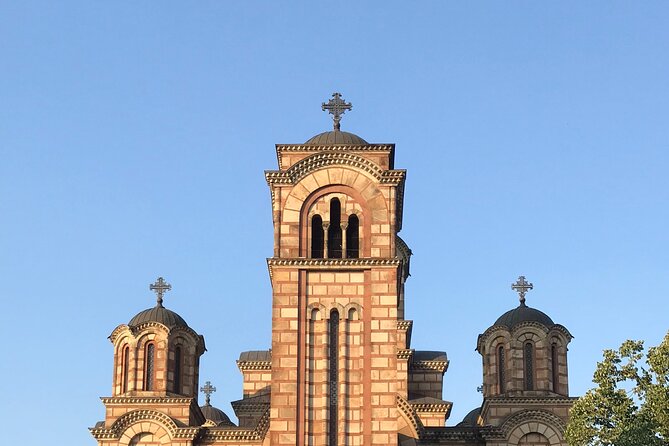
You meet at St. Mark Orthodox Church on Bulevar kralja Aleksandra 17. That location is smart, because it puts you near central Belgrade landmarks without making you fight the city before you’re ready. The tour is about 3 hours total, and it’s designed as a walk with short stops, so you get story beats rather than one long lecture.
It’s also a private tour, meaning it’s only your group. That matters if you like asking questions on the spot, or if you’re traveling with family and want to keep the pace human.
Most of the stops include free admission, so you’re not paying again and again just to stand in the right doorway. You do not get a long transport segment either. This is a center-city history walk where your feet do the work and your brain does the connecting.
Holy Trinity Church and the Baron Wrangel burial stop
Your first big emotional hit comes at the Russian church connected to Baron Wrangel, where you visit his burial site. The stop is about 30 minutes, and admission here is free, which helps you keep the moment from feeling like a rushed checkmark.
Why this matters: in many Russian emigration stories, you hear about armies, politics, and leaders as names on paper. Wrangel brings it down to the ground. You’re walking to a place that anchors the broader White Army storyline in one physical location.
If you’re interested in how history becomes memory, this is the kind of stop that does it. It also sets the tone for the rest of the walk, where the question becomes: what did the city absorb, and what did it reject?
Practical note: this is a walking tour, so wear shoes you’d actually trust for cobblestones and uneven ground.
- Northern Serbia: Sremski Karlovci and Novi Sad Full-Day Tour from Belgrade
★ 5.0 · 425 reviews - Day Trip from Belgrade: Gems of Eastern Serbia
★ 5.0 · 424 reviews - Belgrade Nightlife Bar Pub Club Crawl with Drinks
★ 5.0 · 277 reviews
Serbian Parliament, post offices, ministries, and Russian architectural influence
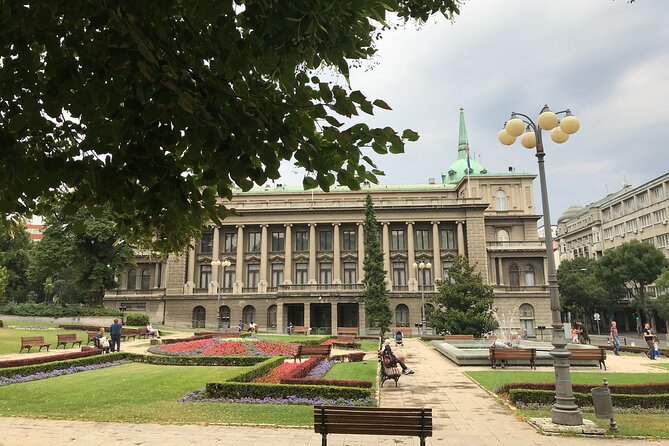
Next, you move through the former royal park area and zero in on buildings that shaped Belgrade’s political look. You’ll focus on the House of the National Assembly of the Republic of Serbia, plus surrounding structures like the post office, the General Staff, and ministries.
The guide frames this as a Russian footprint in the city’s architecture. You’ll learn that Russian architects helped form Belgrade’s appearance, but the credit isn’t always spelled out in the straightforward way you might expect. That is a theme that runs through the tour: the emigrants and their influence are there, but they’re not always labeled clearly for modern visitors.
This stop is about 30 minutes, and it’s free to visit. The value is that you’re not just looking at pretty facades. You’re practicing the skill of reading a city like a map of past power.
If you like walking tours that teach you how to notice, this is one of the best parts. You’ll leave with a better eye for what you see later on your own.
Royal Palace pass-by and the Nicholas II connection
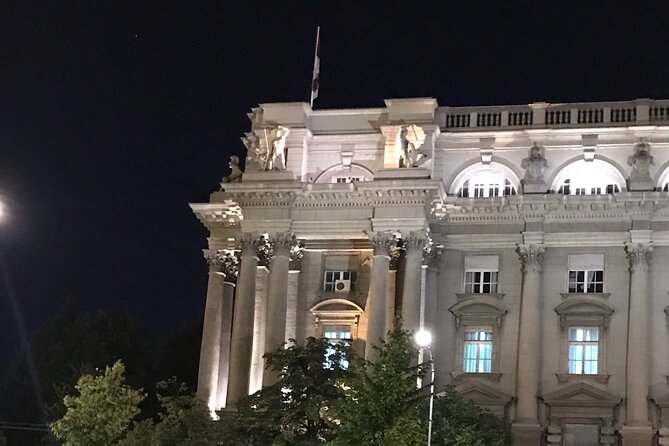
You then pass Royal Palaces and see a monument to Nicholas II. This is around 30 minutes, also free, and it plays a special role in the story because it links dynasties and relationships, not just events.
The emotional temperature shifts here. Earlier, you were anchored by exile hardship. Now you’re facing symbolism: a monument and the idea of two connected lines of power and influence.
Even if you already know the basics of Nicholas II’s fate, the tour helps you connect why a Serbian capital would give him this kind of visible presence. It’s not just about a person. It’s about the relationships countries built and how those ties show up later in stone.
Hotel Moskva, craft workshops to designers, and Belgrade cake culture
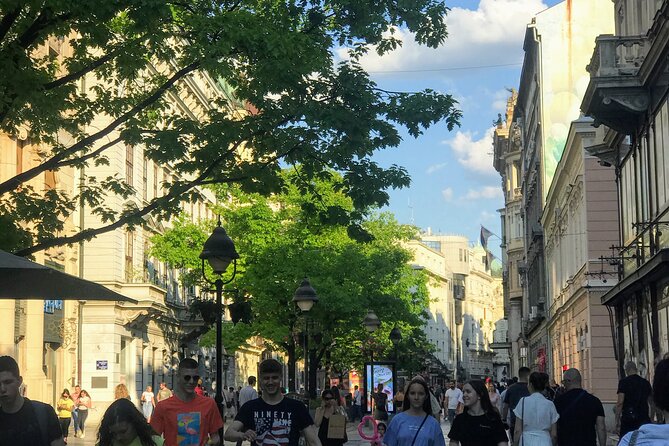
Then you get a more everyday kind of historical texture at Hotel Moskva. The tour includes time to walk down a street that used to be filled with craft workshops and now is taken over by designers.
This is a subtle but smart part of the experience. History isn’t only churches and monuments. It’s also how a street changes hands and trades over time.
Inside the hotel, you have a chance to get coffee and taste the Moskva and Aurora cakes, made according to a half-century-old recipe. The tour also points you toward the kind of bellevue social world Belgrade had, and the kind Russian arrivals could fit into.
A heads-up: the tour list says snacks and alcoholic beverages are not included. Coffee and the cakes are mentioned as part of the experience, but they may be something you pay for on site depending on how the operator runs it. Either way, it’s worth budgeting a little if you want to do the full flavor.
Best value angle: you’re not adding a random food stop. You’re eating in a place that the story places on the timeline.
National Theatre: Russian performers, stage design, and the power of songs
From there you head to the National Theatre, with about 15 minutes at the stop. This one is quick, but it connects art to migration in a very concrete way.
You’ll learn about Russian ballerinas who performed there, and about scenic designers, choreographers, and directors who worked in that theatrical space. It’s a reminder that emigration wasn’t only about survival. It also carried talent, and that talent helped shape local cultural life.
The guide also talks about street songs and what to remember with kind words when you hear a choir singing in Serbia. That’s not just poetic. It’s teaching you how culture transmits values when political systems are in chaos.
Drawback to consider: because the stop is shorter, you won’t get a deep museum-style explanation of every artistic figure. Think of this as a focused cue. If you want more, you’ll have the names and themes in your head and can follow up on your own after.
Science and exile: Belgrade University and the Academy of Sciences and Arts
Your next anchor point is the Serbian Academy of Science and Arts area, with a stop that’s about 30 minutes. You’ll also see Belgrade University and the Academy of Sciences and Arts, and the guide connects the dots to the fate of emigrant scientists.
This is one of the most useful stops if you like seeing migration as a brain circulation, not only a labor shift. When skilled people are displaced, the host country either gains knowledge or loses it through misunderstanding and instability. Here, you’ll get the story through what the city keeps and what it struggles to integrate.
It’s also a good change of pace after the intense political threads earlier in the tour. You get time to sit with how exile affects careers, research, and institutions.
If you’re traveling with someone who thinks history is boring, bring them to this stop. Science stories are often easier to care about because they’re concrete.
Nemanjina and Gavrilo Princip square, where WWI becomes personal
The final major stop is Nemanjina, including time at the Gavrilo Princip square. This takes about 30 minutes, and it brings the story into the First World War context.
The guide explains the role of the incident and how it shaped world history. That might sound like a familiar topic, but the tour places it beside Russian emigration places you can still visit today. So you start seeing how multiple crises were running at the same time across the region.
You’ll also be invited to think about how places that emigrants would have visited a century ago still exist and still function in the city. That creates a powerful time overlap, but without turning into mystical storytelling. It’s grounded in real coordinates.
This stop is also a nice wrap because it returns you to the bigger question from the beginning. Europe was reorganizing itself violently. People moved. Empires fell. New identities got forced into new paperwork, new neighborhoods, and new cultural roles.
Price and value: is $173.64 worth it for a 3-hour walk?
At $173.64 per person for about 3 hours, the price can feel steep at first glance. Here’s how I’d judge value.
First, you’re getting a guide and a route that connects multiple city landmarks to one coherent theme, not a generic walking tour. Second, the stops are free admission, so you’re not paying extra just to get into the next place. Third, the focus on specific people and places you can still see, like Baron Wrangel’s burial connection and Nicholas II’s monument, gives you stronger payoff than the usual “look left, then look right” sightseeing.
Also, the experience includes a mobile ticket, which tends to reduce friction when you arrive. And group discounts exist, which can make it a lot more reasonable if you’re traveling with others.
If you’re coming to Belgrade for the first time and you want a story-based route that teaches you how to read the city, this can be good value. If you already know the topic deeply and you hate structured tours, you might feel it’s priced for first-time context rather than for experts.
Who should book this White Emigration walk?
You’ll likely love this tour if:
- You enjoy history that is tied to walking, not just sitting in a classroom
- You want a Russian emigration angle that’s specific to Belgrade, not generic Europe-wide context
- You care about how architecture and culture record political events
- You like asking questions mid-walk and getting clear answers
You might skip it if:
- You want a relaxed, mostly scenic city stroll
- You dislike discussions about war, exile politics, and complicated legal survival topics like Nansen passports
- You prefer tours with lots of food included. Coffee and cakes are part of the experience concept, but the package lists snacks as not included
And one last practical thing: the tour is not advertised as extremely long at each stop. You should still plan for steady walking and a few minutes of standing around for stories.
Should you book? My take
If you’re the kind of traveler who likes to leave a city with names you can actually place on a map, book it. This tour does a rare thing: it uses Belgrade’s real landmarks to explain how the Russian Revolution fallout shaped a new life far from home.
The strongest selling point is Julja and the way she makes nuance feel approachable, with energy and real emotion behind the facts. The route also gives you a satisfying balance of politics, architecture, arts, and science, ending with the First World War thread at Nemanjina.
If you’re on the fence, here’s the test I use: ask yourself whether you want Belgrade to be a story you can follow, rather than a collection of photos. If yes, this is a smart use of your time.
FAQ
How long is the tour?
It runs for about 3 hours.
Where does the tour start?
You start at St. Mark Orthodox Church, Bulevar kralja Aleksandra 17, Beograd, Serbia. It ends back at the same meeting point.
What is included?
A guide is included.
What is not included?
Alcoholic beverages and snacks are not included.
Are the stops free to enter?
Most stops are listed as free admission, including the Holy Trinity Church stop and the architecture and landmark stops.
Is it a private tour?
Yes. It is private, and only your group participates.
Can I cancel for free?
Yes, free cancellation is available. You can cancel up to 24 hours in advance for a full refund.
Everything We Have Reviewed in Serbia
Serbia, Explained Again
Just Reviewed in Serbia
- Private Half Day Serbia Tour Novi Sad and Petrovaradin Fortress★ 5.0 · 3 reviews
- Private Wine Tasting by Party in Belgrade★ 5.0 · 3 reviews
- Belgrade: The White Emigration in Serbia in the Wake of the Russian Revolution★ 5.0 · 3 reviews
- Zica and Studenica monastery From Belgrade★ 5.0 · 3 reviews
- Feel Belgrade Welcome tour★ 4.5 · 3 reviews
Serbian History & Culture Tours, side by side.
 ★ 5.0History and Culture in my BelgradeFrom $9041 reviews
 ★ 5.0Feel SerbiaFrom $1309 reviews
 ★ 5.0Romantic history tour of BelgradeFrom $428 reviews
 ★ 4.5Feel Belgrade Welcome tourFrom $323 reviews
Also on these Serbia lists