
REVIEW · BELGRADE
Architecture of New Belgrade – Brutalism Decoded
Concrete has a story, and it starts in Belgrade. This tour gives you an in-depth look at New Belgrade’s brutalist architecture through five real stops, plus a quick drive-by political context, so you’re not just looking at buildings, you’re learning how they were meant to work. I love the private format, since the pace feels tailored to your questions, and I love how the guide connects concrete forms to daily life in the blocks. One possible drawback is that each location is a short visit, so if you want a long, slow architectural lecture at every site, you may feel slightly rushed.
You’ll also get a smooth start and finish, meeting at the Museum of Contemporary Art at Ušće and ending at the Sava Center, both easy to orient around. With a $86.42 per person price for roughly 2 hours 30 minutes, this feels like good value because you’re mainly paying for expert-led interpretation, not ticket time. The tour is offered in English, uses a mobile ticket, and is designed for small-group comfort, not a crowded stampede.
In This Review
- Key highlights at a glance
- Why New Belgrade Brutalism Feels Human, Not Cold
- Museum of Contemporary Art, Ušće: Marble vs. Socialist Expectations
- Park of Friendship: Non-Aligned Movement Peace, Planted in 1961
- Drive-By Context: The Government Building and Yugoslavia’s Political Shift
- Genex Tower at Narodnih heroja 45: The Western City Gate
- Sava Center: A Congress Giant Built Fast, Still in Use
- Primary School Laza Kostić: Block No. 23 and Concrete Expressionism
- Price, Timing, and How to Make This Tour Worth Your Money
- Who This Tour Suits Best (And Who Might Want Something Longer)
- Should You Book Architecture of New Belgrade – Brutalism Decoded?
- FAQ
- How long is the tour?
- Where do we meet the guide?
- Where does the tour end?
- Is this a private tour?
- What language is the tour offered in?
- Do I need a ticket on my phone?
- Which stops are included?
- Are admission tickets included?
- Is it near public transportation?
- Can I cancel for a full refund?
Key highlights at a glance
- Museum of Contemporary Art, Ušće as your opening clue: modernist volumes plus marble that challenges socialist expectations
- Park of Friendship’s Non-Aligned Movement story: trees planted in 1961 as a peace symbol
- Genex Tower at close range (Narodnih heroja 45): a brutalist icon tied to Belgrade’s Western City Gate identity
- Sava Center’s “record times” building story: still running today, with interiors that feel surprisingly current
- Block no. 23 and Primary School Laza Kostić: concrete expressionism tied to community design
- Private tour flow: only your group, with guide focus that actually answers your questions
The Yugoslav decades, told on the street
Why New Belgrade Brutalism Feels Human, Not Cold
New Belgrade can look like one big design statement from the distance, mostly concrete, mostly bold, and often reduced online to quick photos. This tour pushes past that surface. The real payoff is how the guide turns concrete into meaning: who built these places, what politics they absorbed, and how people lived inside them when the city was young.
I like that the experience is structured like a story, not a random hopscotch of landmarks. You start with a museum that already shows contradictions, then move through spaces meant to signal peace, power, progress, and community. If you care about architecture, you’ll enjoy the forms. If you care about people, you’ll still get something, because everyday life is part of the explanation.
One more practical point: because it’s a private tour, the pace does not feel like you are being processed. That matters on a route like this, where a lot of the interest is in details you might miss if you’re rushing.
Museum of Contemporary Art, Ušće: Marble vs. Socialist Expectations
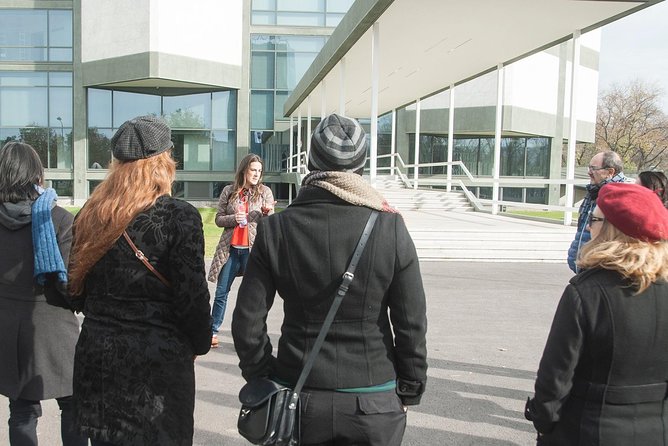
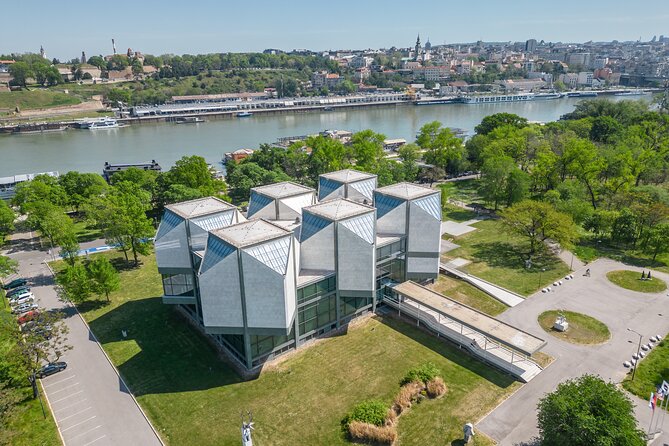
Your tour begins in front of the Museum of Contemporary Art at Ušće, at Ušće 10. This is a clever first stop because it sets up the tour’s main theme: contradictions. The building’s modernist 1960-ies volumes are one story, and the marble facades are another.
Here’s what I find useful for your visit. In many people’s minds, socialist architecture comes with certain expectations, heavy and ideological, with fewer surprises. This museum challenges that simple picture. You get to see how material choices, like precious marble, can clash with what people assume about the era. Even if you only spend about 20 minutes, this framing makes the rest of the route click.
A drawback to plan for: the museum visit time is limited. Admission for the museum is not included, so if you do want to enter, budget for that extra cost. If you mostly want the exterior interpretation, you can still get a strong start, because the guide’s emphasis is on how the building reads on the outside.
Park of Friendship: Non-Aligned Movement Peace, Planted in 1961
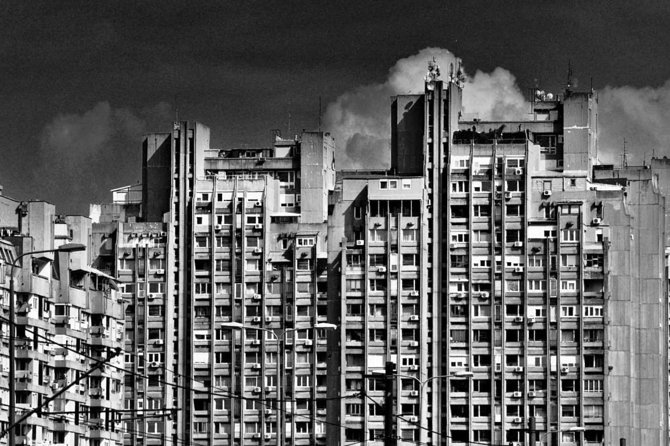
Next you move to the Park of Friendship, known as Park Prijateljstva. The stop is about 15 minutes, and it’s a nice reset from concrete massing.
The key story here is the Non-Aligned Movement. The park connects to 120 countries, and it was founded in 1961, when heads of states planted trees as a symbol of peace. This is not just a pretty green patch in the middle of New Belgrade planning. It’s a reminder that the brutalist era was also about international positioning and belief systems.
What you’ll appreciate, if you’re paying attention, is how the design of a park can carry political weight. You’ll look at the landscape like a document. Even if you only get a short walk-through, you’ll come away with a clearer idea of why Belgrade’s leaders used visible gestures, like tree planting, to project calm and credibility during Cold War tensions.
The park stop is free in terms of admission, which keeps the schedule friendly. Just remember that this portion is outdoors, so dress for the weather.
More murals and concrete worth staring at
- Architecture of New Belgrade – Brutalism Decoded
★ 4.5 · 24 reviews - Private 4 Hours Space Architecture Tour in Belgrade
★ 5.0 · 7 reviews - E-Scooter Street Art Tour
★ 4.5 · 6 reviews
Drive-By Context: The Government Building and Yugoslavia’s Political Shift
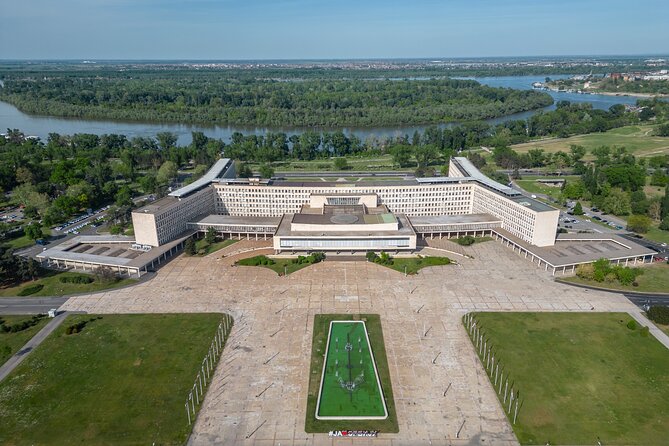
Between stops, you’ll drive past a huge Government Building. This isn’t a full stop with a long explanation, but it’s an important context moment.
The building is described as a monument from an earlier phase of Yugoslav politics, and it also experienced the switch away from Stalin while under construction. That detail matters because it helps explain why these eras can feel confusing at first glance. Architecture often freezes a set of intentions mid-change, so you can see traces of more than one political mood.
If you like understanding buildings as timelines, you’ll enjoy that drive-by. You get a quick “why this looks like it does” lens before you reach the heavy hitters like Genex Tower.
Genex Tower at Narodnih heroja 45: The Western City Gate
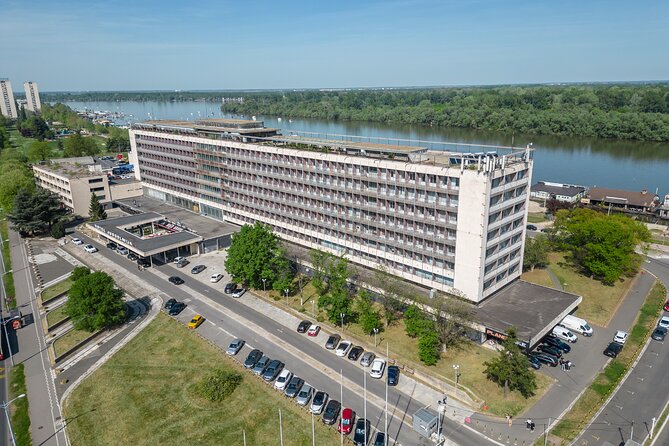
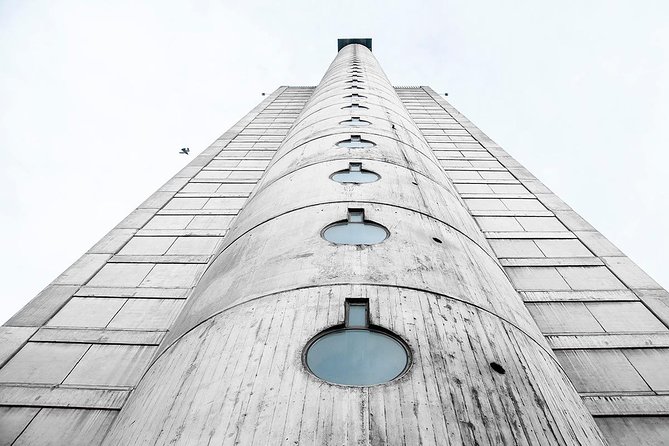
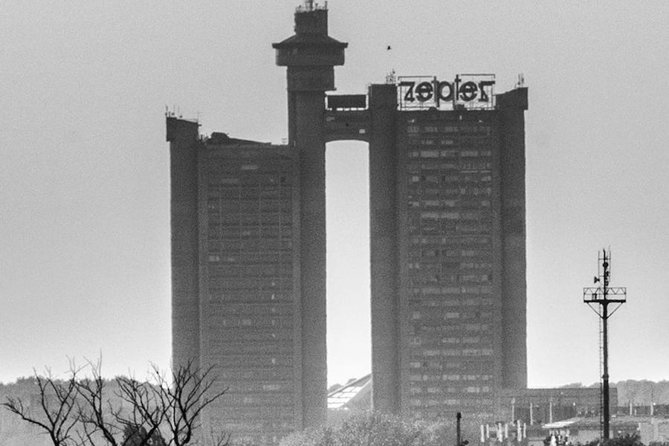
Stop 3 brings you to Narodnih heroja 45 for a close-up look at Genex Tower. This is also called the Western City Gate of Belgrade, and the vibe is instantly recognizable.
Expect a 30-floor structure, built about 40 years ago, with a reputation for being both photogenic and architecturally important. The tour frames it as a brutalism example that made it into international architecture reviews, and it’s also described as the first smart building in the Balkans.
That last point is worth thinking about. When people hear smart building, they often picture modern tech first. Here, the meaning is more about the concept of progress: the idea that a city could look forward, not only grow older. In New Belgrade, that progress mindset shows up in concrete and geometry as much as in electronics.
Time here is about 20 minutes, and admission is free for this stop. You should still plan how you want to photograph. The tower is the kind of subject that looks different depending on where you stand, so if you want shots from multiple angles, use the early part of your time well.
If you only know Genex Tower from social media, this stop can recalibrate your eye. The guide helps you see it not as a trendy skyline object, but as a design statement with a specific time and ambition behind it.
Sava Center: A Congress Giant Built Fast, Still in Use
Your final major site is Sava Center, with about 15 minutes on the schedule. This is a gigantic congress center built at the end of the 1970s in record times, and it’s described as the first building of that type in this part of Europe.
What makes this stop practical is that it’s still functioning. A lot of historic architecture tours focus on ruins or museum-only contexts. Here, you can look at a building that still hosts events and daily operations. The guide also points out that the interior solutions are surprisingly well designed and still feel fresh after 40 years.
Even with limited time, you can learn something useful. Try to notice how a big public building solves flow and comfort. When interiors feel competent decades later, it’s a clue that the architects were thinking beyond momentary style.
Admission is free for this stop, which helps you keep the tour cost under control. Also, since this is a busy type of venue, it can help to keep your expectations realistic. You’re not touring every room like a guided museum. You’re getting an architectural orientation, plus the context that makes the building feel less like a random concrete block and more like a tool built for public life.
Primary School Laza Kostić: Block No. 23 and Concrete Expressionism
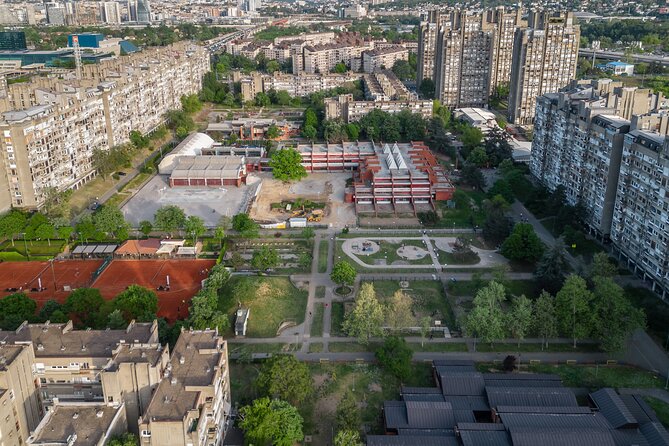
The last stop is Primary School Laza Kostić inside Block no. 23. This is where New Belgrade becomes most relatable, because it’s not a monument for leaders. It’s about a place designed for inhabitants.
The tour describes Block no. 23 as one of the most representative public housing projects, and the style is again tied to concrete expressionism. Here you’ll focus on the concept of “everything provided” inside the block. That includes the apartment buildings, the school, the kindergarten, sport courts, and even a mini shopping mall.
This is the moment when brutalism stops being just a style word. You start thinking about urban planning as a promise. In the golden decades of the 60s, 70s, and 80s, the block offered structure and convenience. The guide also shares personal stories about what life in the blocks felt like in the 90s, when things were not so great.
I like that this stop gives you a human scale. You’re not just looking at a city master plan. You’re seeing how design can support routine, community, and identity, then also how those systems can struggle when the broader country changes.
Time is about 15 minutes here, and admission is free. Wear shoes you can move in comfortably, because even a short visit can involve uneven outdoor areas and time spent looking up and down at the block’s layout.
Price, Timing, and How to Make This Tour Worth Your Money
The price is $86.42 per person, and the duration is about 2 hours 30 minutes. That sounds compact, and it is. But the route is efficient because it covers five major buildings tied directly to the brutalism story.
Here’s where the value comes from. Museum tickets are not included at the first stop, but the other stops are listed as free. So you’re paying mainly for interpretation: the guide’s explanations, the context connections, and the way you learn how each building fits into the political and social puzzle.
Private format also changes the math. If you’re traveling with family or friends who actually care about architecture, private tours can feel more cost-effective than you’d think. The guide can answer your questions at Genex Tower or talk through the design ideas at the school stop, instead of rushing past because of a group schedule.
Your biggest timing consideration is that each location is brief. This is not a slow, sit-down tour where you linger for an hour inside each stop. It’s built for the kind of person who wants a fast and accurate understanding of a theme. If that’s you, you’ll leave with a strong mental map of New Belgrade.
Who This Tour Suits Best (And Who Might Want Something Longer)
This tour is a great fit if you like mid-century design, politics in built form, and the idea that buildings reflect daily life. It’s also ideal if you’re curious about New Belgrade but want to skip the guesswork. The route is tight, the stops are meaningful, and the guide adds context that helps you read what you see.
From past experiences with guides on this route, the standout ingredient is clear storytelling and on-time, confident handling of the sites. One guide named Xenia is specifically mentioned for being spot on time and extremely knowledgeable in how she explains both architecture and the humanity inside it. That kind of guide can make a short stop feel complete.
Who might feel disappointed is someone who expects long time at fewer sites, or someone who wants pure design analysis with less human context. The route does visit five buildings, but the tour time per place is limited, so you won’t have hours to study one façade.
Should You Book Architecture of New Belgrade – Brutalism Decoded?
If you want a practical, theme-driven introduction to New Belgrade’s brutalist architecture, I’d book this. It hits the key sites you should know, and it connects the concrete to real stories, like how block life worked in the 60s through the 80s and what changed later.
Book it if:
- you like architecture that has a social story, not just a style label
- you want a private English guide and a simple meeting and ending plan
- you’re okay with short stops and a fast route across five buildings
Skip it if:
- you want long museum-style time inside buildings
- you’re only interested in one or two iconic photos, because the value here is in the full theme arc
FAQ
How long is the tour?
It runs for about 2 hours 30 minutes.
Where do we meet the guide?
You meet in front of the Museum of Contemporary Art at Ušće, Ušće 10, Belgrade.
Where does the tour end?
The tour ends at Sava Center, Milentija Popovića 9, Belgrade.
Is this a private tour?
Yes. It is a private tour, so only your group participates.
What language is the tour offered in?
It is offered in English.
Do I need a ticket on my phone?
Yes. The tour uses a mobile ticket.
Which stops are included?
The route visits five buildings: Museum of Contemporary Art (Ušće), Park of Friendship, Genex Tower at Narodnih heroja 45, Sava Center, and Primary School Laza Kostić inside Block no. 23.
Are admission tickets included?
Admission is not included for the Museum of Contemporary Art stop. Other listed stops are free.
Is it near public transportation?
Yes, the tour is near public transportation.
Can I cancel for a full refund?
Free cancellation is available. You can cancel up to 24 hours in advance for a full refund, as long as you cancel at least 24 hours before the start time based on local time.
Everything We Have Reviewed in Serbia
Murals, Blocks and Brutalist Belgrade
Tito, Concrete and the Old Republic
Just Reviewed in Serbia
- Private Half Day Serbia Tour Novi Sad and Petrovaradin Fortress★ 5.0 · 3 reviews
- Private Wine Tasting by Party in Belgrade★ 5.0 · 3 reviews
- Belgrade: The White Emigration in Serbia in the Wake of the Russian Revolution★ 5.0 · 3 reviews
- Zica and Studenica monastery From Belgrade★ 5.0 · 3 reviews
- Feel Belgrade Welcome tour★ 4.5 · 3 reviews
Belgrade Communist & Yugoslav History Tours, side by side.
 ★ 5.0Red Belgrade Communist TourFrom $5378 reviews
 ★ 4.5Communist Tour in BelgradeFrom $2419 reviews
 ★ 5.0NATO Bombing of Belgrade Historical TourFrom $6917 reviews
 ★ 5.0E-Scooter Communist Yugoslavia TourFrom $4815 reviews
 ★ 4.5NATO Bombing of Belgrade Private TourFrom $14511 reviews
 ★ 5.0Tito and History Vintage Car TourFrom $14411 reviews
 ★ 5.0E-Scooter Belgrade Hooligans TourFrom $487 reviews
 ★ 5.0Eat Like Tito – Gastro Historical ExperienceFrom $1274 reviews
Also on these Serbia lists