
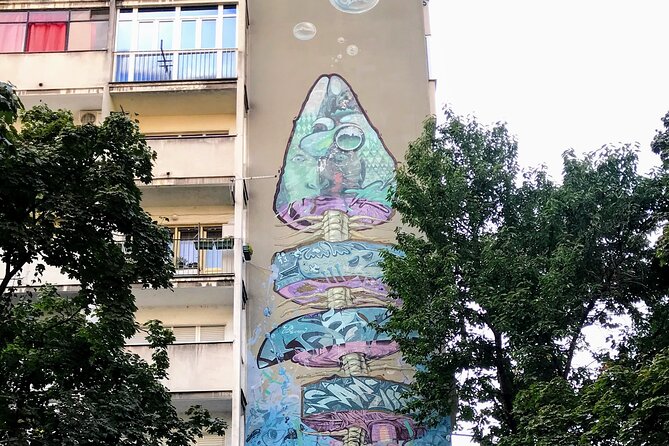
REVIEW · BELGRADE
Private Belgrade Street Art and Adventures Walking Tour
Belgrade street art makes the city click. This private 3-hour route gives you context for what you’re seeing and why it matters, not just a bunch of pretty murals. I especially like the stop mix, from the Magacin alternative cultural centre to old-school walls covered with meaning. One drawback to plan for: it is a walking tour, so if you dislike streets and short stops, you might want a slower day.
You’ll spend the time learning how Belgrade’s alternative scene, squatters, and underground art shape everyday urban space. I also like that the pace is structured, with about 30 minutes at each key spot, so you get stories without feeling rushed. You’ll likely want to budget extra for drinks or snacks since those are not included, even if there’s time to try local craft beer and sweets.
If you care about how art and society meet, this tour fits your style. It also helps you see Belgrade beyond the obvious highlights, especially when you want to understand what locals pay attention to. With the free admission at each stop and a guide leading the way, it’s a straightforward way to get oriented fast.
In This Review
- Key things I’d focus on before you go
- Belgrade street art as a city map, not just decoration
- Meeting at Terazije Fountain and pacing the 3-hour walk
- Stop 1: Magacin, alternative culture and an open calendar spirit
- Stop 2: Karađorđeva 31 mural by Guillaume Alby (REMED)
- Stop 3: Belgrade Design District and a 90s mall turned creative hub
- Stop 4: Street Gallery, outdoor art inside a hidden passage
- Stop 5: Cetinjska 15, a former brewery turned alternative hub
- What you really get from the guide, historical context included
- Price and value for a private 3-hour street art route
- Food, beer, and sweets: what is included and what you should plan for
- Who this tour suits best (and who might not love it)
- Should you book this Private Belgrade Street Art and Adventures Walking Tour?
Key things I’d focus on before you go
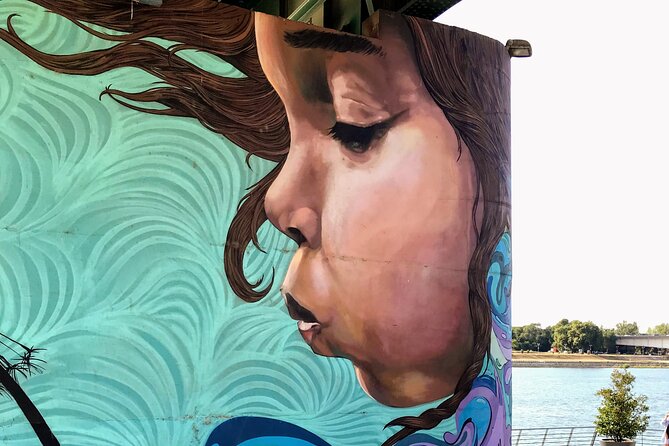
- Alternative culture stops with real atmosphere at long-running venues, not just wall photos.
- Murals explained with history, including a specific 2008 BELEF festival work.
- A 90s shopping mall reborn by young Belgrade designers and artists.
- Outdoor art in hidden passages, where street art becomes a street-level gallery.
- Former brewery turned creative hub, mixing art with bars, clubs, galleries, and street art.
- Private format so your questions get answered and the pace stays comfortable.
More of the old town at walking pace
Belgrade street art as a city map, not just decoration
Belgrade has street art at a level that feels like a second language. On this tour, you learn to read that language. You’ll connect mural themes to what people value, what they question, and how they use public space.
The biggest win here is the way the tour turns art into information you can actually use. You’re not just looking at walls. You’re picking up ideas about how street art works in an urban setting, from street corners to courtyards to passageways.
I also like how quickly you get momentum. In just a few hours, you go from famous-looking murals to less obvious areas that feel more like local hangouts than tourist stops. That matters because the real story of Belgrade is often in the spaces that visitors miss.
The tour is private, so it stays focused on your group. That is handy if your crew includes anyone who asks lots of questions, or if you want a slower stroll for photos.
Meeting at Terazije Fountain and pacing the 3-hour walk
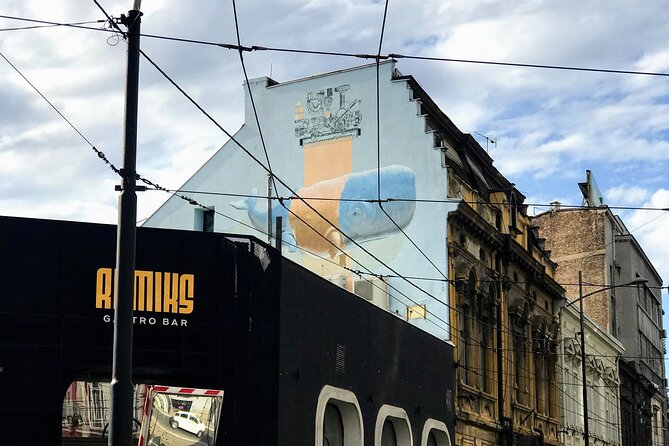
The tour starts at Terazije Fountain and ends back near the same meeting point. That loop makes sense because you’re not constantly changing plans or hopping across the city with transit.
It’s listed at about 3 hours, with multiple stops of around 30 minutes each. That rhythm is practical. You get enough time to look closely, then enough time for conversation so the murals do not blur into a single wall of color.
It also says you’re near public transportation, and that most people can participate. Translation: you probably can handle the walk if you’re comfortable in city streets and you do not need a wheelchair-friendly route spelled out. Still, bring comfortable shoes, because “short” stops add up fast when you’re scanning walls, alleys, and courtyards.
One more practical note: it’s a mobile ticket tour, and confirmation comes at booking. So you’ll want to keep your phone handy and charged, especially if you’re arriving from another part of Belgrade.
Stop 1: Magacin, alternative culture and an open calendar spirit
The first stop is Magacin, described as one of the oldest alternative cultural centres in Belgrade. It’s also a street art hotspot, plus a space for culture and social activities based on an open calendar model.
This is a smart opening stop. You start with a place, not just a mural. That matters, because you quickly learn that the street art scene is not only about images. It’s also about who meets where, what gets organized, and how creative communities keep showing up.
What to look for at Magacin is the way the venue functions like a living stage for the alternative scene. You’ll likely notice the layers: street art presence, event energy, and the idea that culture here is scheduled by the community, not by distant institutions.
A possible consideration: since it’s tied to an open calendar model, the vibe can vary depending on what’s happening at the centre during your visit. That’s not a problem, it’s just good to remember. You’re not only touring a museum wall, you’re visiting a cultural engine.
More murals and concrete worth staring at
- Architecture of New Belgrade – Brutalism Decoded
★ 4.5 · 24 reviews - Private 4 Hours Space Architecture Tour in Belgrade
★ 5.0 · 7 reviews - E-Scooter Street Art Tour
★ 4.5 · 6 reviews
Stop 2: Karađorđeva 31 mural by Guillaume Alby (REMED)
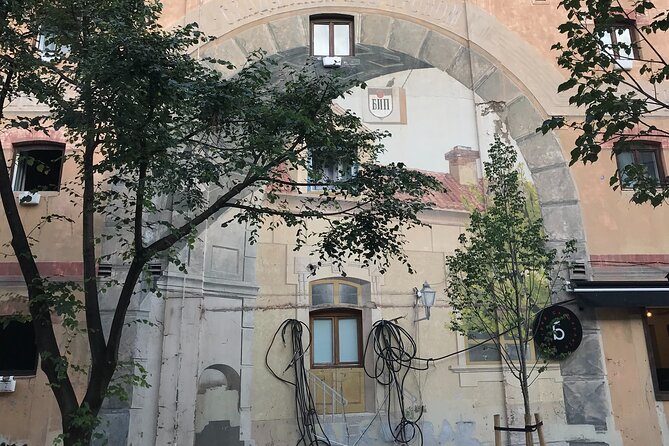
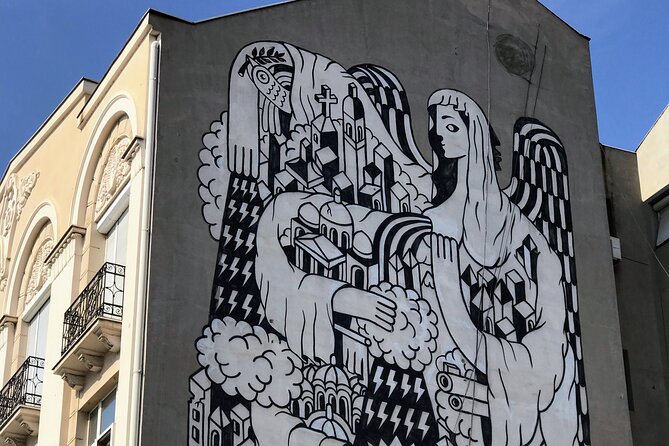
Next you head to Karađorđeva 31, where a mural by French artist Guillaume Alby, working under REMED, was painted in 2008 during the BELEF festival. The mural is inspired by Belgrade history and sacral art.
This is where the tour earns its keep. A lot of street art tours stop at visual impressions. Here, you get a clear anchor: this is a specific artist, a specific moment in 2008, tied to a named festival, and tied to history plus sacral themes.
When you stand in front of a mural like this, you can start making sense of the symbols instead of guessing. You’ll likely leave with a better sense of how international artists contribute to local conversations, and how Belgrade themes travel outward and get reinterpreted.
One thing to keep in mind: at murals like this, details reward patience. If your attention span is short, take a breath, slow down, and let your guide point out the meanings you might otherwise miss.
Stop 3: Belgrade Design District and a 90s mall turned creative hub
Then you move to the Belgrade Design District, where an abandoned shopping mall from the 90s is now occupied by young Belgrade designers and artists. This stop is about space, reuse, and the creative economy you can see with your own eyes.
Malls are built for a certain kind of life. When a mall is abandoned, it often becomes a blank page, or it becomes a problem. In this case, the story is different. The space has been taken over by creatives, turning a forgotten footprint into workshops, displays, and hangouts for people making things.
Why this matters for you: you start to see street art not as random decoration, but as part of a bigger creative ecosystem. The tour connects murals and galleries to the spaces where artists actually work and meet.
Possible drawback: because it’s a design and art area rather than a single official attraction, the look and activity level can vary. That does not reduce the value, it just means your best experience comes from being ready to walk, look around, and let the guide explain what you’re seeing.
Stop 4: Street Gallery, outdoor art inside a hidden passage
The fourth stop is Street Gallery, an outdoor independent art gallery in a hidden passage. It focuses on critical works from young artists.
This is the kind of stop that makes you understand why street art tours are worth doing with guidance. A hidden passage is not something you would reliably find on your own, and that’s exactly where the best feeling often lives.
What I like about this stop is the tone. A critical-focused gallery means the art is not only aesthetic. It’s also commentary. You’ll likely spend time reading the artworks as arguments about society, culture, and power, rather than treating them as visual noise.
If you like photography, this is also a good moment. The setting gives you different angles than you get on main streets, and the passage format creates a more intimate viewing experience. Just be respectful and avoid blocking other people who are checking the works out.
One consideration: hidden passages are easy to miss. Stay close to your guide and keep your eyes up for the directions and entrances.
Stop 5: Cetinjska 15, a former brewery turned alternative hub
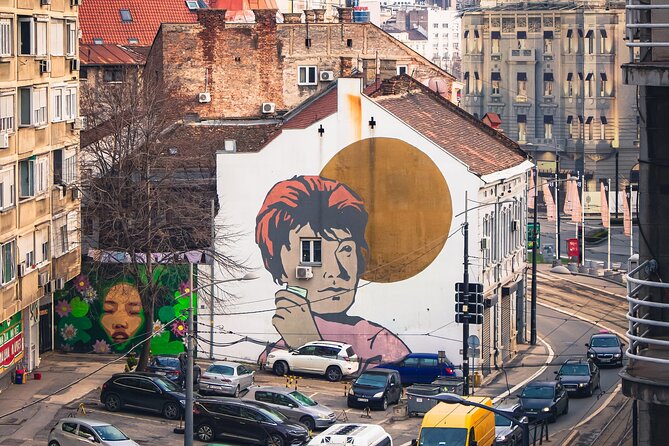
The final stop is Cetinjska 15, a former brewery transformed into an alternative hub. It includes bars, clubs, galleries, and street art.
This is an excellent way to close the loop. By the time you reach Cetinjska 15, you have already learned how street art connects to underground art scenes and community spaces. Now you see how those scenes translate into nightlife and everyday culture.
A brewery is an industrial structure. When it becomes a creative hub, you can often feel that mix between old bones and new use. Street art inside a space like this tends to feel more grounded, like it belongs to the building’s history rather than sitting on top of it.
This stop also ties into the tour’s promise of trying local treats. The overview notes craft beer and handmade sweets as part of the experience, but the tour is clear that snacks and alcoholic beverages are not included. So think of it as a chance to taste if you want, and plan to pay if you order.
Practical tip: if you are sensitive to crowds or noise, you might want to pace yourself at the end. Bars and clubs can get energetic fast, and this tour is focused on several locations in a row.
What you really get from the guide, historical context included
The guide is a core part of the value here. The written feedback you might expect from a top-rated experience tends to point to two things: the guide connects the art to history, and the guide explains how street art works in the urban landscape.
That’s exactly what you need if you want the city to start making sense. Street art can look chaotic if you only see it as style. With the right context, you can start noticing patterns: references to local history, themes tied to sacred art, and critical messages from young artists.
I also like that questions get handled during the walk. When your guide can answer in the moment, you stop feeling like you’re collecting facts for later. Instead, you understand the meaning while you’re looking at it.
Because it’s private, you can also ask for clarification without worrying about slowing a large group. That keeps the experience personal instead of rushed.
Price and value for a private 3-hour street art route
At $219.94 per person, this is not a budget stroll. But private street art tours in major art capitals often price like this because you are paying for more than “someone who points at murals.”
Here, the value comes from:
- a guided route through specific street art hotspots and cultural spaces
- free admissions at the listed stops
- a structured 3-hour format with time at each location
- the context that helps you actually interpret what you see
If you’re visiting Belgrade for the first time and you want to understand the alternative scene without spending hours researching where to go, this cost can feel reasonable. If you’re mainly chasing photos and you don’t care about meanings, you might get less value.
Food, beer, and sweets: what is included and what you should plan for
The tour experience mentions fine craft beer from Belgrade breweries and handmade sweets. But the tour listing states that snacks and alcoholic beverages are not included.
So plan like this: you will have opportunities to stop near places where you can buy drinks or snacks, but you should budget extra if you want the beer and sweets. If you avoid alcohol, you can still enjoy the final venue and treat the food part as optional.
Either way, this is not a problem for the tour flow. It’s a good reality check. Your money goes into the guided art and access to the right spaces, not into a meal package that you might not even want.
Who this tour suits best (and who might not love it)
This is a great fit if you:
- want Belgrade’s art scene explained in plain language
- enjoy history and symbolism, not just visual sightseeing
- like meeting places that show up in local culture, not only official attractions
- prefer a private format where your questions get answered
It might be less ideal if you:
- hate walking or tight schedules
- want a purely sit-down, low-stimulation experience
- prefer mainstream monuments over street-level culture
If you’re traveling with friends who disagree on what they want to do, this tour often works because it mixes art, culture, and neighborhood vibe. One person gets murals and stories, another person gets the feel of alternative districts and hidden spaces.
Should you book this Private Belgrade Street Art and Adventures Walking Tour?
I’d book it if you want Belgrade to feel understandable fast. The route hits multiple types of spaces, and the guide’s focus on meaning and context makes the art land.
Book it if you’re excited by the alternative cultural scene, squatters and underground art themes, designer spaces, outdoor galleries, and a creative end stop where art meets nightlife energy.
You might skip it only if you’re set on doing Belgrade at a slow, casual pace, or if you want everything included in one price. Here, drinks and snacks are not included, and you will be walking.
If you do book, my practical advice is simple: come with comfortable shoes, a phone ready for a mobile ticket, and a willingness to slow down in front of murals. That’s where the stories actually click.
Everything We Have Reviewed in Serbia
Murals, Blocks and Brutalist Belgrade
Belgrade Streets, One More Loop
Just Reviewed in Serbia
- Private Half Day Serbia Tour Novi Sad and Petrovaradin Fortress★ 5.0 · 3 reviews
- Private Wine Tasting by Party in Belgrade★ 5.0 · 3 reviews
- Belgrade: The White Emigration in Serbia in the Wake of the Russian Revolution★ 5.0 · 3 reviews
- Zica and Studenica monastery From Belgrade★ 5.0 · 3 reviews
- Feel Belgrade Welcome tour★ 4.5 · 3 reviews
Belgrade Old Town Walking Tours, side by side.
 ★ 5.03-Hour Small Group Walking TourFrom $35180 reviews
 ★ 5.0Half-Day Sightseeing and Walking Tour of Belgrade CityFrom $3837 reviews
 ★ 5.0E-Scooter Zemun TourFrom $4826 reviews
 ★ 5.0Belgrade City Walk, Gathering and SightseeingFrom $3819 reviews
 ★ 5.0Belgrade Private Walking Tour with a LocalFrom $4219 reviews
 ★ 5.0Belgrade Old City 2-Hour Walking TourFrom $6015 reviews
 ★ 5.04-Hour Belgrade Private Grand City Walking TourFrom $1028 reviews
 ★ 5.03-Hour Belgrade Zemun Neighborhood TourFrom $928 reviews
Also on these Serbia lists