
REVIEW · BELGRADE
Belgrade Old City 2-Hour Walking Tour
Belgrade feels compact, and this tour proves it. In 2 to 3 hours you piece together the Old City from squares to fortress viewpoints with an English guide. Expect Ružica church and Ottoman-era stops that make centuries feel close.
I love the way each story is tied to what you can see, so you leave with on-the-ground context and names that stick. I also love the Ružica church details, including chandeliers made from spent cartridges and other military items.
One drawback to plan for: the walk needs moderate fitness, and a warm day can feel long if you do not pace yourself. Bring water and wear shoes with good grip.
In This Review
- Quick hits before you go
- Republic Square, Prince Mihailo, and the start of your Belgrade map
- Studentski trg and Captain Miša’s university stories
- Dorćol crossroads: Jewish community memory and the Ottoman link
- Bajrakli Mosque and Ottoman Belgrade in one remaining building
- Kalemegdan Fortress gates: Roman remains to medieval walls
- Ružica Church interior: cartridges in chandeliers and respect during services
- Upper Town viewpoints at the Sava and Danube confluence
- Pobednik, Sava promenade, and Meštrović’s big monuments
- Kosančićev Venac: cathedral area, The Question Mark, and the National Library site
- Back up toward Knez Mihajlova and finishing at Republic Square
- Price and time: is $60.08 a good deal for this walk?
- Should you book this Belgrade Old City walking tour
- FAQ
- Where does the tour start?
- How long is the Belgrade Old City walking tour?
- Is the tour offered in English?
- Is this a private tour?
- Does the price include hotel pickup and drop-off?
- Are service animals allowed?
Quick hits before you go
- Meet at Republic Square at Trg Republike 3, by the horseman statue of Prince Mihailo.
- English guidance from real people including Jelica, Aleksandar, and Melissa, who explain Serbian history in everyday terms.
- Ružica Church can catch you mid-service, and the guide may ask you to keep cameras down.
- Kalemegdan Fortress is the core route, layering Roman remains, medieval gates, and two Orthodox churches.
- Bajrakli Mosque is the standout Ottoman stop, a 16th-century building still standing in Belgrade.
- Kosančićev Venac adds a slower finish, with artists’ lanes, the cathedral area, and the site tied to the National Library’s destruction in 1941.
More of the old town at walking pace
Republic Square, Prince Mihailo, and the start of your Belgrade map
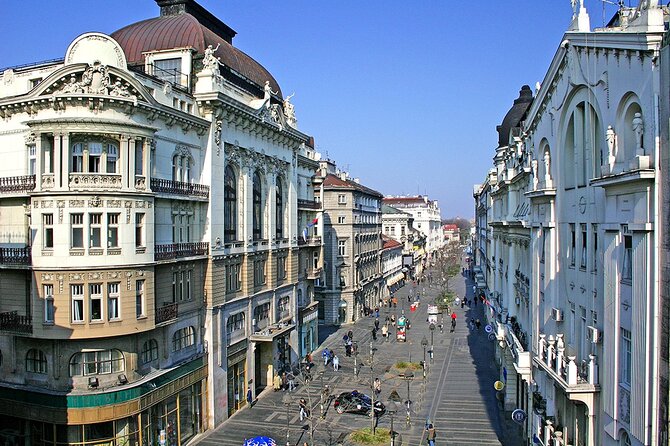
Most Belgrade tours start with a blur. This one starts with a fix. You meet at Republic Square (Trg Republike), right in front of the horseman statue of Prince Mihailo. The guide sets the scene by pointing out the big neighbors around the square, including the National Museum and National Theatre, and then explains why Prince Mihailo matters in Serbia’s modern story.
This is a smart first stop because it gives you orientation before you climb into the fortress zone. If you arrive 10 to 15 minutes early, you’ll have time to get your bearings and figure out where you are relative to Knez Mihajlova and the river.
The square stop is brief, around 10 minutes, but it matters. You’ll spend the rest of the walk understanding what you are looking at, not just passing by it.
Studentski trg and Captain Miša’s university stories
Next comes Student’s Square (Studentski Trg), described as the oldest urban city square in Belgrade, with a more classical feel and a park in the middle. This stop is not just scenery. It is about the concentration of education and ideas right in the center of town.
You’ll hear how Belgrade does not work like a single campus, but instead clusters major schools here, including the Faculty of Philosophy, Faculty of Philology, and Faculty of Mathematics and Natural Sciences. The guide also highlights the Captain Miša’s Edifice, the headquarters of the University of Belgrade, and shares stories connected to Captain Miša’s charity and generosity, plus Serbian minds and scientists.
If you care about culture beyond monuments, this is a great breather. It shifts the tour from empire and war into people and institutions.
Dorćol crossroads: Jewish community memory and the Ottoman link
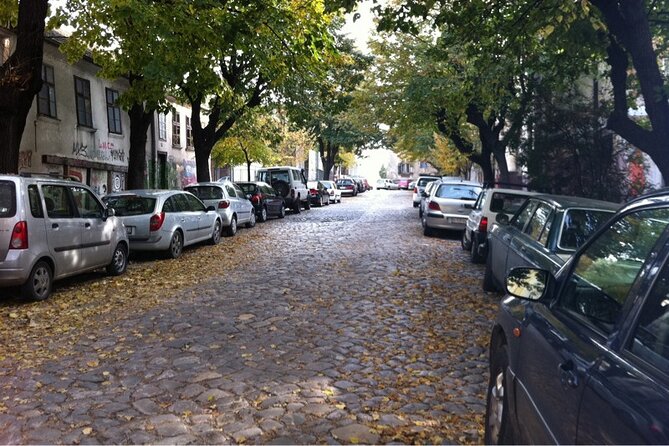
Then you walk into Dorćol, a neighborhood tied to trade routes and the idea of crossroads. The name connects to a colloquial Turkish word for crossroads, and Dorćol’s role as a trading point during Ottoman times is part of the explanation you get on the ground.
You also stop at the Jewish community center, where the guide discusses the Jewish community in Belgrade, focusing on everyday life and work, then the tragic change during World War II. It is history with a human scale, and the guide’s storytelling style can make the topic feel more understandable than a textbook summary.
This stop lasts about 15 minutes. It is long enough to connect the dots, but short enough that you do not lose momentum before moving toward the next religious landmark.
Practical tip: Dorćol’s streets can be uneven, so keep your pace steady and watch your footing.
More Serbian streets covered on foot
- Belgrade Old City 2-Hour Walking Tour
★ 5.0 · 15 reviews - 4-Hour Belgrade Private Grand City Walking Tour
★ 5.0 · 8 reviews - 3 Hour Private Walking Tour in Novi Sad City
★ 5.0 · 6 reviews
Bajrakli Mosque and Ottoman Belgrade in one remaining building
Your next major change in tone is religious and architectural. The stop is Bajrakli Mosque (Bajrakli džamija), a 16th-century building described as the only remaining mosque in Belgrade. That one fact makes the stop feel urgent, like you are seeing a survivor from a larger system that is no longer there.
The guide explains how Belgrade looked and lived under the Ottomans, using the mosque as a visual anchor. This is the kind of stop where the outside is only half the story. The guide’s context helps you understand why one building can carry so much meaning.
Time here is about 15 minutes. Don’t rush it. If you glance from one angle to another, you’ll notice details that you might otherwise miss, even on a quick group walk.
Kalemegdan Fortress gates: Roman remains to medieval walls
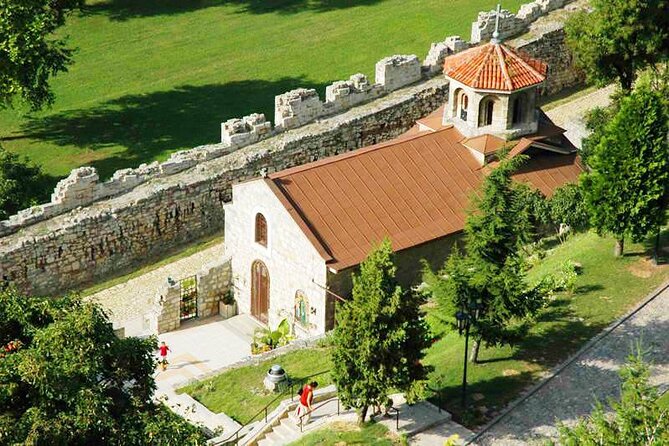
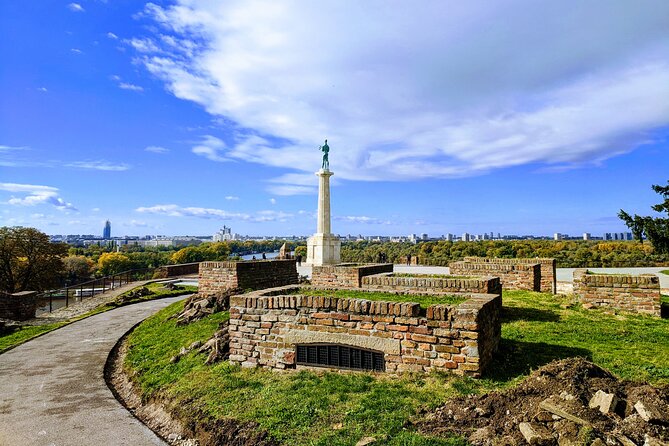
Now you step into the big one: Kalemegdan Fortress, inside Kalemegdan Park, described as the oldest and largest park in the city center. The tour works your way through the fortress from gates and walls that sit on older foundations.
Starting near Leopold’s Gate, you pass remains of the Roman castrum Singidunum, then medieval walls built on top of it. The guide points out named sections and gates such as Zindan Gate, Despot’s Gate, and Jakšića tower, dating to the 15th century.
This is also where you start mixing faith into the fortress story. You visit two Orthodox churches placed in this area: the Chapel of St Petka and Ružica Church.
Time on this segment is about 15 minutes. For me, that’s exactly right. The fortress can eat hours on its own, so the tour gives you a clear route and the key names without turning it into a slow slog.
If you like history layers, this is the stop that ties the whole walk together.
Ružica Church interior: cartridges in chandeliers and respect during services
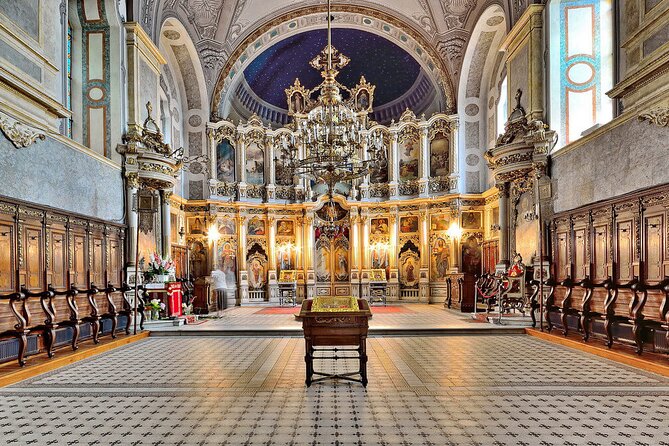
Ružica Church is the emotional and visually memorable moment for many people, and it is easy to see why from what’s inside. Built around 1875, the structure’s earlier life is part of the explanation, including that it once served as a gunpowder magazine and a military school. Today it’s described as the oldest Orthodox church in Belgrade and one of the most impressive visually.
The interior includes three chandeliers made from spent cartridges, cannon ammunition, officers’ swords, and soldiers’ pistols from the Salonika Front. Even if you do not know the details behind every item, the sheer material story is striking. It’s a church built from remembrance, not from clean abstraction.
There is one etiquette point that matters. If there is a service going on, the guide may limit photography. In one memorable experience shared with this tour, the guide correctly asked people not to take photos but allowed the group to experience the service inside for a few minutes. That kind of moment can make the visit feel personal in a way monuments rarely do.
Plan: keep your phone ready for quick photos outside, but be ready to put it away inside.
Upper Town viewpoints at the Sava and Danube confluence
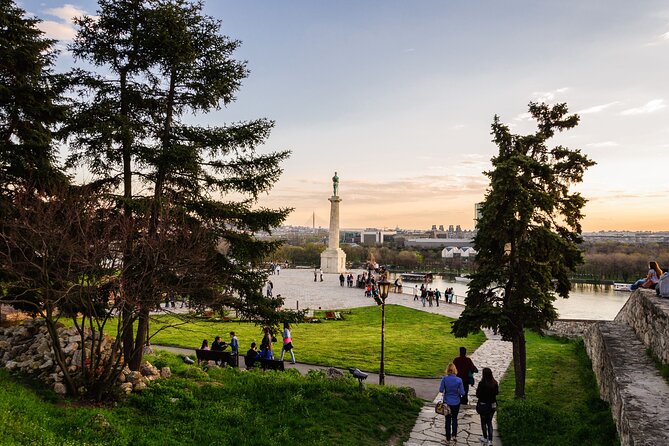
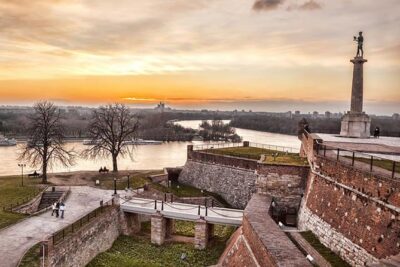
After Ružica, the tour turns into the postcard part of Belgrade, without pretending it is just about photos. You enter the Upper Town, where the guide points out the confluence of the Sava and the Danube. The rivers meeting here is a big reason Belgrade has always been a strategic city, and the guide ties that logic back to the fortress and gates you just walked through.
You also pass Mehmed-pasha Sokolović fountain and Defterdar’s gate, then you look over the Lower Town from above. The highlights include the Main gunpowder storage, Karl VI’s gate, and Nebojša tower.
Time for this stretch is about 15 minutes. It moves fast by design, but it gives you enough to understand the fortress layout and why these positions were valuable.
If you hate rushing viewpoints, watch the pace. If you find a spot you like, tell the guide you want a second look, then rejoin the group quickly.
Pobednik, Sava promenade, and Meštrović’s big monuments
The next landmark is Pobednik, a Victor monument and likely the most photographed Belgrade icon on this route. The sculptor is Ivan Meštrović, and the guide explains it was made in 1928 to commemorate Serbia’s triumph over both the Ottoman and Austro-Hungarian empires, as a proud reminder of the past.
This stop lasts about 15 minutes, and it is a useful pause after the fortress ramps. You get space to stand, look, and decide what you want to revisit later.
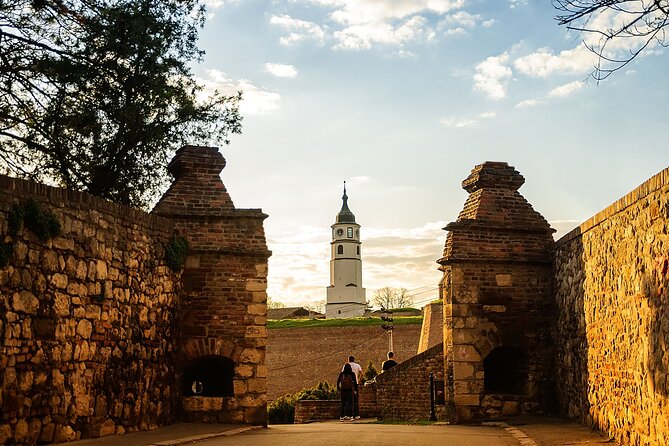
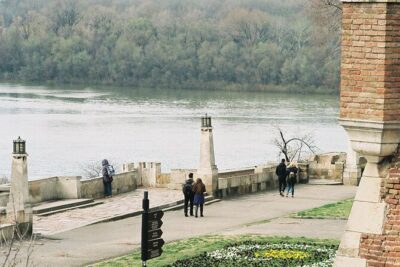
From here, you continue through the Upper Town and toward the river side. You’ll see the Roman well, the King’s gate, and the Sava promenade, plus the Damat Ali Pasha Tomb and Clock Gate with the Clock Tower. You also pass the Military Museum area and exit via Istanbul gate (Stambol gate), then loop back into Kalemegdan Park.
One of the best moments in this stretch is the Monument of Gratitude to France by Ivan Meštrović, plus busts of famous Serbian men of letters you can pick out if you keep your eyes open.
Kosančićev Venac: cathedral area, The Question Mark, and the National Library site
Once you leave the fortress arc, you walk toward Kosančićev Venac, specifically described as part of the town built on the Sava river banks. Here you hit a different kind of Belgrade atmosphere: more quiet lanes, cobblestones, and artist-centered streets.
In this section you see the Serbian Orthodox Patriarchy and Belgrade Cathedral. You also stop near the oldest Belgrade tavern called The Question Mark. Another key building is the Residence of Princess Ljubica, described as an elegant Balkan style edifice.
The tour then slows and gives you around 40 minutes for the neighborhood walk. You’ll hear why the area is often referred to as Belgrade Montmartre, tied to painters, sculptors, photographers, and art schools that call the older streets home.
One heavy but important stop is the site where the National Library of Serbia stood before it was destroyed in Belgrade’s Nazi bombing in 1941. It gives the tour a full-circle feeling, moving from fortress stories into the modern tragedies that shaped Belgrade too.
Back up toward Knez Mihajlova and finishing at Republic Square
The final stretch is about reconnecting the dots between Belgrade’s old layers and its 19th and 20th-century city fabric. You climb back toward the center via King Peter’s Street, passing the King Peter I Elementary School, a Neo-renaissance palace of the National Bank of Serbia, and an Art Nouveau department store.
Then you head along Knez Mihajlova, a pedestrian street, and reach Republic Square again. Along the way you pass major examples of civil architecture from the 19th and 20th centuries, including the Serbian Academy of Science and Arts.
It’s a good closer because you end where you started, so you can better understand the layout in your head. You finish back at the meeting point, so you do not have to plan a separate route out.
If you want to extend the day, this is a natural moment to choose one or two stops you liked and go back on your own.
Price and time: is $60.08 a good deal for this walk?
At $60.08 per person for a 2 to 3 hour walk, you are paying mainly for two things: a guide who can explain complicated Serbian and Balkan history clearly, and a route that hits major sights efficiently.
Here’s why it can feel like good value:
- Many stops are marked free for admissions, so you are not stacking extra ticket costs on top of the guide fee.
- You cover a lot of named places in one logical chain, from squares to Ottoman-era architecture to fortress layers.
- You get English-speaking guidance, which matters if you want more than surface facts.
A small planning note: it’s often booked about 40 days in advance, so reserving ahead helps if you have tight travel dates. Also, you benefit from a private setup where only your group participates, which tends to make questions easier and the pace more comfortable.
Should you book this Belgrade Old City walking tour
If you want a practical first pass through Belgrade, this tour is a strong choice. It gives you a clear route from Republic Square into Kalemegdan Fortress, then back down through neighborhoods like Kosančićev Venac, with history explained in a way that helps you remember names and locations.
Book it if:
- You like walking tours that mix major monuments with city logic.
- You care about how Belgrade changed across Ottoman, Roman, medieval, and modern eras.
- You want a guide to interpret the emotional stops, like the Ružica Church interior and the National Library bombing site.
Skip it if:
- Long city walking on uneven ground sounds exhausting, because the tour does require moderate fitness and keeps you moving.
If you book, come with comfy shoes and a willingness to pause when the guide points something out. That’s where the tour earns its price.
FAQ
Where does the tour start?
The meeting point is Republic Square (Trg Republike 3, Beograd 11000, Serbia), in front of the horseman statue (Prince Mihailo monument).
How long is the Belgrade Old City walking tour?
The tour runs about 2 to 3 hours.
Is the tour offered in English?
Yes. The tour is offered in English with a professional English-speaking guide.
Is this a private tour?
Yes. This is a private tour, and only your group participates.
Does the price include hotel pickup and drop-off?
No. Hotel pickup and drop-off are not included.
Are service animals allowed?
Yes. Service animals are allowed.
The Rest of the Serbian Shortlist
Everything We Have Reviewed in Serbia
Belgrade Streets, One More Loop
Just Reviewed in Serbia
- Private Half Day Serbia Tour Novi Sad and Petrovaradin Fortress★ 5.0 · 3 reviews
- Private Wine Tasting by Party in Belgrade★ 5.0 · 3 reviews
- Belgrade: The White Emigration in Serbia in the Wake of the Russian Revolution★ 5.0 · 3 reviews
- Zica and Studenica monastery From Belgrade★ 5.0 · 3 reviews
- Feel Belgrade Welcome tour★ 4.5 · 3 reviews
Belgrade Old Town Walking Tours, side by side.
 ★ 5.03-Hour Small Group Walking TourFrom $35180 reviews
 ★ 5.0Half-Day Sightseeing and Walking Tour of Belgrade CityFrom $3837 reviews
 ★ 5.0E-Scooter Zemun TourFrom $4826 reviews
 ★ 5.0Belgrade City Walk, Gathering and SightseeingFrom $3819 reviews
 ★ 5.0Belgrade Private Walking Tour with a LocalFrom $4219 reviews
 ★ 5.03-Hour Belgrade Zemun Neighborhood TourFrom $928 reviews
 ★ 5.04-Hour Belgrade Private Grand City Walking TourFrom $1028 reviews
 ★ 5.0Belgrade Walking Tour in FrenchFrom $436 reviews
Also on these Serbia lists