
REVIEW · BELGRADE
Belgrade Walking Tour in French
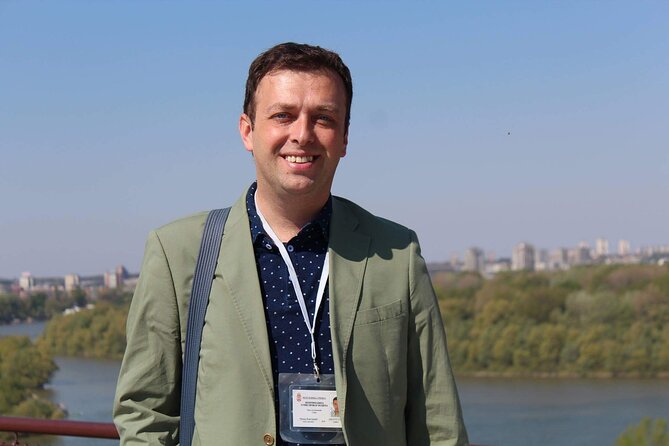
Belgrade has a voice you can walk with. This 3.5-hour French walking tour uses journalist Nenad’s storytelling to connect old quarters, the fortress viewpoints, and a clear thread of Franco-Serbian friendship.
I especially like two things. First, the Dorćol stop is built for real street-level learning, with you noticing signs and practicing how to read Cyrillic. Second, the Kalemegdan area delivers big payoff views, with the fortress and confluence of the Sava and the Danube right there as you learn.
One thing to consider: it is still a long walking session (about 3 hours 30 minutes), and the explanations are in French, so bring comfortable shoes and be ready for a steady flow of facts and anecdotes.
In This Review
- Key highlights you will feel right away
- A French journalist, a small group, and the real Belgrade
- Start at Trg Republike: Prince Michel, theaters, and the white-city vibe
- Skadarlija and the Rue de France, the Montmartre of Belgrade
- Dorćol: the old core, the one mosque, and Cyrillic street reading
- Ruzica Church inside the citadel story
- Kalemegdan Park and Belgrade Fortress: Ottoman threads and big views
- France in Belgrade: Monument of Gratitude and the Embassy mood
- King Peter I’s street and the Belgrade you can taste
- Price and value: what you’re paying for
- Who this tour suits best
- Should you book the French Belgrade Walking Tour with Nenad?
- FAQ
- What language is the tour in?
- How long is the Belgrade Walking Tour in French?
- How much does the tour cost?
- How many people are in the group?
- Is there a ticket or entry fee for the stops?
- How do I receive my ticket?
- Where do I meet the guide?
- Where does the tour end?
- Is the meeting point near public transport?
- What is the cancellation policy?
Key highlights you will feel right away
- French-led, journalist-style storytelling with Nenad, plus the kind of anecdotes that make a capital feel less like a textbook
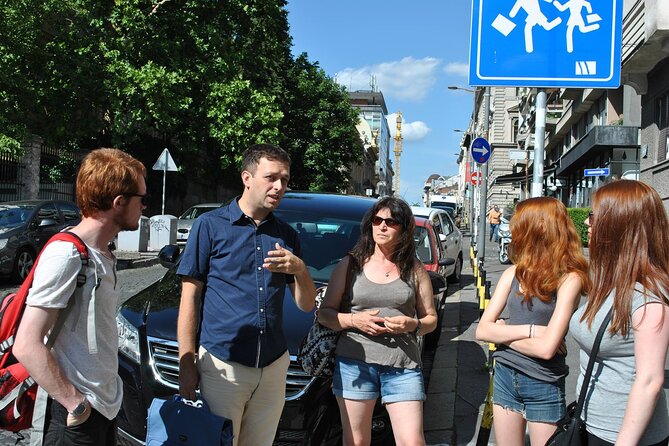
- Cyrillic practice in Dorćol, turning street signs into a mini language lesson as you walk
- Kalemegdan fortress panoramas, where the geography explains the history
- A Francophonie route through streets and monuments, linking Belgrade to France in very tangible ways
- Small group size (up to 8), which makes questions and back-and-forth conversation much easier
More of the old town at walking pace
A French journalist, a small group, and the real Belgrade
What makes this tour work is the guide. Nenad does not just point and name. He teaches like a working journalist, mixing history with how people live now, and weaving in the kinds of side stories that pop up when you spend years covering a place.
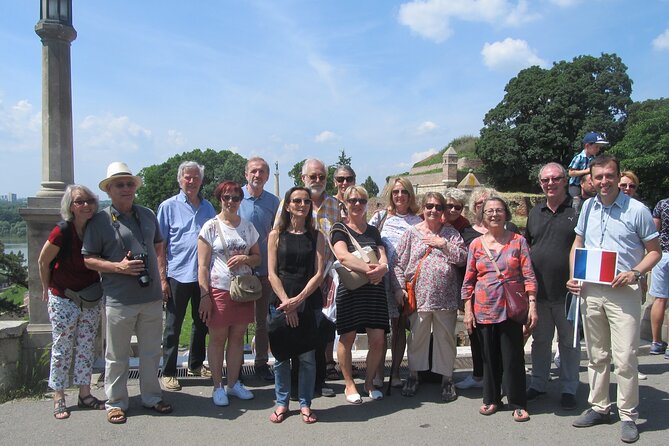
The group stays small, up to 8 people. That matters because Belgrade is a city of layers: Ottoman-era influence in one block, Austro-Hungarian or interwar echoes in another, and then modern everyday life running alongside it all. With a small group, you can ask questions, get clarification fast, and actually follow the thread.
The tour is priced at $43.94 per person for about 3 hours 30 minutes on foot. Entrance tickets for the listed sights are free, so your money mainly buys the human experience, the French-language guidance, and the smart route that helps you see more without burning time guessing your way around.
If you prefer your travel to be orderly and quiet, this may feel more talk-heavy than a self-guided stroll. But if you like explanations, local context, and street-level discoveries, it is a strong match.
Start at Trg Republike: Prince Michel, theaters, and the white-city vibe
You meet at Trg republike 3 in Republic Square. This is a fitting start, because the area helps you understand Belgrade as a city built to look outward, not hidden. The tour kicks off with the key sights around the square, including the monument to Prince Michel, the National Theater, and the National Museum.
Even if you do not plan to go inside every building, this opening works as orientation. You begin to see the scale and style of the city center, and you get a framework for the rest of the walk. The guide ties what you see in front of you to why it matters, including the long push and pull of influences that shaped modern Serbia.
Practical note: the stop is short at this point, around 15 minutes, but it sets your mental map. By the time you are leaving the square, you know which direction the city is turning and how the route will link major neighborhoods.
Skadarlija and the Rue de France, the Montmartre of Belgrade
From Republic Square, you head toward the bohemian story of Belgrade through Skadarlija. One of the most fun parts is that you will walk along themed streets. You get a stop connected to rue de France, and nearby you will encounter rue Skadarska, the heart of the 19th-century bohemian district often called the Montmartre of Belgrade.
The detail that really sticks here is that Rue Skadarska is the only street twinned with Montmartre. That is the kind of fact that makes you stop and look around differently. Suddenly, the street names are not random. They are a map of cultural links and public imagination.
This segment is around 10 minutes, so it is not a long detour. It works best as a palate cleanser between bigger historic stops. Expect a pleasant change in atmosphere, with narrower, more “neighborhood” energy compared with the open feel of Republic Square.
More Serbian streets covered on foot
- Belgrade Old City 2-Hour Walking Tour
★ 5.0 · 15 reviews - 4-Hour Belgrade Private Grand City Walking Tour
★ 5.0 · 8 reviews - 3 Hour Private Walking Tour in Novi Sad City
★ 5.0 · 6 reviews
Dorćol: the old core, the one mosque, and Cyrillic street reading
Next comes Dorćol, described as the epicenter of old Belgrade. This is where the tour shifts from monuments to everyday street learning. You walk through an area where architectural styles show up side by side, wrapping around the streets like a living archive rather than a museum gallery.
One highlight here is the only mosque in Belgrade, which you will see during the walk. The guide also emphasizes something practical: pay attention to the plates and signs. That leads into one of the most useful parts of the entire experience, the chance to learn how to read the Cyrillic alphabet at the pace of real street context.
Here is why I think this stop is so valuable: it helps you stop being dependent on translation apps as soon as you leave the tour. If you can recognize a few letter shapes, you start unlocking bus stops, shop signs, and place names. Even a small boost in reading ability can make a city feel less foreign.
The time spent here is not listed as a long block, but the payoff is high because you are practicing something you can use later, even after the tour ends.
Ruzica Church inside the citadel story
As you move into the citadel area, you reach Ružica Church. The guide’s explanation focuses on a surprising transformation: the church was once a gunpowder warehouse, then turned into a military church during 1867 to 1869.
That kind of fact does more than add trivia. It changes how you look at the setting. In a fortress area, you start to understand that buildings were repurposed depending on what the city needed at the time, and that religious space and military space were not always separate categories here.
This stop is brief, around 10 minutes, so the goal is not deep museum-style study. It is more like a keyhole view that helps you understand what the citadel has been through.
Kalemegdan Park and Belgrade Fortress: Ottoman threads and big views
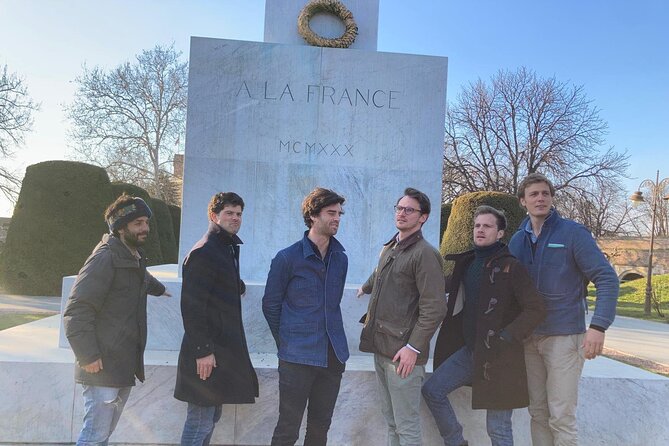
Then you reach Kalemegdan Park and the Belgrade Fortress. This is where the tour becomes visually satisfying in a big way. From here you get the panoramic perspective of the confluence of the Sava and Danube.
Geography matters in Belgrade. Waterways shaped movement, defense, trade, and cultural exchange. The guide uses the view to connect the landscape to history, including discussion of the Ottoman era in Serbia and how that influence shaped Serbian culture.
Even if you already know a bit about the region, having the explanation paired with the physical view helps it stick. You can see why fortifications were logical, and you can understand why certain neighborhoods and roads grew the way they did.
This segment is around 15 minutes, so you will not lose the group to long wandering. Still, it is long enough to get your bearings and enjoy the scene, especially if you pause for a few photos and let the water and bridges settle into your mental picture.
France in Belgrade: Monument of Gratitude and the Embassy mood
Before you wrap up, the tour returns to the Francophonie theme with the Monument of Gratitude to France. This part focuses on stories of Franco-Serbian friendship since the Great War.
This stop is short, about 10 minutes, but it adds emotional context to what you saw earlier in street names and cultural references. The tour is not only about shared language or polite cultural symbolism. It is also about real historical connections between countries, explained in plain terms as you stand in front of the monument.
You also pass the French Embassy in Serbia. The guide points out the building’s interwar feel, tied to monumental classicism and the refinement in its sculptures. Even if you do not get inside, you will leave with a better sense of how architecture can signal diplomacy, power, and cultural identity.
King Peter I’s street and the Belgrade you can taste
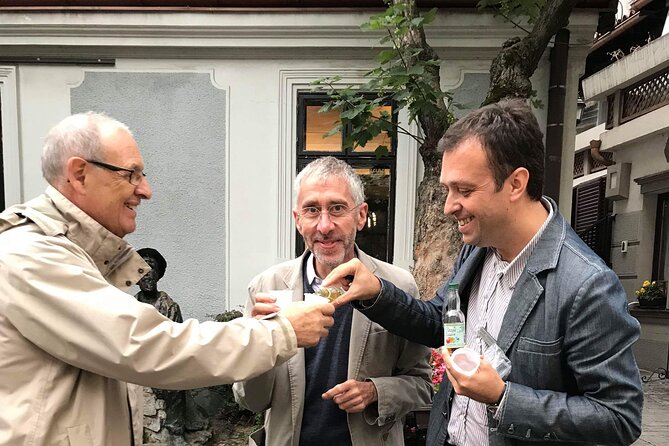
On the final stretch, you pass through the area around Kralja Petra Street and the neighborhood tied to King Peter I of Serbia, a French-speaking king. That detail matters because it makes the last part of the route feel connected, not random.
You will also see places linked with Belgrade’s dining culture, including the oldest restaurants in the city, plus Princess Ljubica’s mansion and other notable buildings.
This is one of those endings that lets you keep traveling after the tour. You finish with names and landmarks in your head, which makes it easier to pick a first meal or a later wander that feels grounded in the city’s story rather than pulled from a generic map list.
Price and value: what you’re paying for
At $43.94 per person, you are not paying for museum tickets. Many of the stops are listed as free admission during the tour. Instead, you are paying for:
- A French-speaking journalist-guide who can explain what you are seeing and why it matters
- A route that links neighborhoods into one storyline, rather than disconnected highlights
- A small group experience (max 8), which helps you get answers and not just follow at the back of the crowd
- The chance for a hands-on street skill in Cyrillic reading, tied to Dorćol signage
So the value depends on your style. If you love stories and practical context, this is good value. If you prefer silent wandering and short stops only, you may find the talking pace less your thing.
Who this tour suits best
This is a great match if you are:
- Traveling in French or want French-language guidance without switching to English
- Curious about how Belgrade’s past and present sit side by side
- Interested in architecture and street-level details, not just big landmarks
- Ready to walk for about 3.5 hours and take short pauses for photos and explanations
If you do not speak French, it could still be fun for the sights, but the tour is built specifically around being French too. In that case, you might want to plan an additional self-guided buffer time after, so you can slow down and translate on your own.
Should you book the French Belgrade Walking Tour with Nenad?
Yes, book it if you want a guided experience that feels like a guided conversation. The combination of Nenad’s journalist approach, the fortress viewpoint payoff, and the Francophonie storyline through streets and monuments makes this tour more memorable than the usual “three big sites and a photo” route.
I would skip it only if you strongly dislike walking, or if French explanations would frustrate you. Otherwise, this is a smart way to get your bearings fast, learn the city’s visual logic, and leave Belgrade with more than photos.
FAQ
What language is the tour in?
The tour is guided in French, led by a journalist.
How long is the Belgrade Walking Tour in French?
It lasts about 3 hours 30 minutes.
How much does the tour cost?
The price is $43.94 per person.
How many people are in the group?
The group maximum is 8 travelers.
Is there a ticket or entry fee for the stops?
The listed stops show free admission tickets.
How do I receive my ticket?
You get a mobile ticket.
Where do I meet the guide?
The start is at Republic Square (Trg republike 3, Beograd, Serbia).
Where does the tour end?
It ends near Kneza Mihaila 49, Beograd 11000, at the crossroads of Kneza Mihaila and Kralja Petra streets.
Is the meeting point near public transport?
Yes, it is near public transportation.
What is the cancellation policy?
You can cancel for a full refund if you cancel at least 24 hours before the experience’s start time, with free cancellation available.
The Rest of the Serbian Shortlist
Everything We Have Reviewed in Serbia
Belgrade Streets, One More Loop
Just Reviewed in Serbia
- Private Half Day Serbia Tour Novi Sad and Petrovaradin Fortress★ 5.0 · 3 reviews
- Private Wine Tasting by Party in Belgrade★ 5.0 · 3 reviews
- Belgrade: The White Emigration in Serbia in the Wake of the Russian Revolution★ 5.0 · 3 reviews
- Zica and Studenica monastery From Belgrade★ 5.0 · 3 reviews
- Feel Belgrade Welcome tour★ 4.5 · 3 reviews
Belgrade Old Town Walking Tours, side by side.
 ★ 5.03-Hour Small Group Walking TourFrom $35180 reviews
 ★ 5.0Half-Day Sightseeing and Walking Tour of Belgrade CityFrom $3837 reviews
 ★ 5.0E-Scooter Zemun TourFrom $4826 reviews
 ★ 5.0Belgrade City Walk, Gathering and SightseeingFrom $3819 reviews
 ★ 5.0Belgrade Private Walking Tour with a LocalFrom $4219 reviews
 ★ 5.0Belgrade Old City 2-Hour Walking TourFrom $6015 reviews
 ★ 5.03-Hour Belgrade Zemun Neighborhood TourFrom $928 reviews
 ★ 5.04-Hour Belgrade Private Grand City Walking TourFrom $1028 reviews
Also on these Serbia lists