
REVIEW · BEYOND THE BORDER
Small Group Tour; Belgrade to Tirana 5 Balkan Countries in 8 Days
Five countries in one nonstop rhythm. This small-group trip (max 10 travelers) runs with hotel pickup in Belgrade and a guide who keeps the days moving, starting with classic viewpoints from Belgrade Fortress and Kalemegdan Park over the Danube and Sava. You also get a built-in rhythm of short walks, free-time breaks, and transport that takes the guesswork out of crossing multiple regions.
What I love most is the stop that turns the tour from sightseeing into food and people. The Mrizi i Zanave slow-food agro-tourism farm shares how a family operation built jobs for more than 400 people, while preserving regional bio products and even repurposing old communist buildings for storage.
One possible drawback: this is not a slow travel week. You’ll do plenty of walking on uneven ground in places like Sarajevo, and several days include long stretches of driving, so bring your most comfortable shoes and a mindset of go, then pause, then go again.
In This Review
- Key things that make this trip worth your time
- From Belgrade pickup to Zvornik along the Drina, you start with big views
- Sarajevo on foot: war marks, Ottoman markets, and the Latin Bridge story
- Mostar’s Old Bazaar and the “Don’t Forget” reminders of what changed
- Kotor’s UNESCO maze: cobblestones, Saint Luke’s Church, and slow afternoon time
- Budva for old and new, Sveti Stefan for photos, then Shkoder for big views
- Mrizi i Zanave: slow-food farming that actually changes local life
- Prizren in Kosovo: mosque color, fortress panoramas, and a river city feeling
- Gjakova bazaar, Decan monastery UNESCO frescoes, and Rahovec wine terrain
- Kruja’s bazaar and castle: shopping streets, plus siege-era escape paths
- Tirana with a local companion: byrek, coffee culture, raki, and Bunk’Art 2
- What $2,754.29 gets you, and the tradeoffs to watch for
- Should you book? My take for the right kind of traveler
- FAQ
- Where does the tour start and end?
- What time does the tour begin in Belgrade?
- How many people are in the group?
- What is included in the price?
- Are lunch and drinks included?
- Can I get a single room, and what does it cost?
- Is the booking refundable if I cancel?
Key things that make this trip worth your time
- Small group size (up to 10) keeps the pace livable and the guide easy to ask questions to
- First-day Belgrade orientation gives you a clear mental map, from Knez Mihailova to Republic Square
- Sarajevo’s layered streets bring you Ottoman and Austria-Hungary influences plus war marks in the same walk
- UNESCO Kotor old town walking is built like a maze, with Saint Luke’s Church as a local anchor
- Kosovo highlights in Prizren and Decan mix fortress panoramas, mosques, and UNESCO frescoes
- Tirana with a local companion centers on food culture, plus Bunk’Art 2 to frame modern history
Across a border and back before dinner
From Belgrade pickup to Zvornik along the Drina, you start with big views
The tour begins at 8:00am in Belgrade, with pickup from your hotel, which is a real quality-of-life win when you’re starting a multi-country route. The first proper “ah, this is the Balkans” moment comes fast at Belgrade Fortress and Kalemegdan Park, set where the Danube and Sava meet. From the fortress, the city view is the kind that helps you understand why Belgrade has always been fought over, traded, and rebuilt.
You’ll also get a walk through the historic core, with stops like the Pobednik monument (dating to 1913), plus a stroll along Knez Mihailova to Republic Square. It’s a solid way to build your bearings before the driving starts to eat up the day.
Then the route shifts toward Bosnia and Herzegovina, with a stop in Zvornik on the Drina River. This is one of those “breather” moments where you’re given time to grab lunch on your own and just wander. I like having at least one pause like this early, because it keeps the rest of the week from feeling like only checklists.
Sarajevo on foot: war marks, Ottoman markets, and the Latin Bridge story
Sarajevo is the most emotionally intense day, and it’s also one of the most human. You’ll be walking on uneven terrain, and the tour includes ruins and reminders of the Yugoslav War, including visible bullet holes and cannon marks. That’s heavy material, but it’s also why this stop matters, because history here isn’t in a textbook, it’s on the streets.
The city tour connects the medieval story of Sarajevo with Ottoman and Austria-Hungary-era areas. In practice, that means you move through parts of town with different architectural styles and different market vibes, from bazaars to mosques, churches, and synagogues. The goal is to show Sarajevo as a place where different communities lived side by side, not as a single-style museum.
Next comes the Latin Bridge, tied to the WWI trigger story. Even if you know the headline version already, the bridge name and the city geography make the moment feel more concrete. You also get time to think about Sarajevo through food, since the city is known for meat dishes and desserts, and the tour points you toward that angle so you’re not only seeing stone and scars.
Mostar’s Old Bazaar and the “Don’t Forget” reminders of what changed
From Sarajevo, you’ll head toward Mostar, where the tour focuses on the parts of the city that feel unmistakably Mostar. You’ll spend time at the Old Bridge area, which is the visual center of the town, and you’ll also wander through the Old Bazaar.
What I like about the way Mostar is handled here is the balance. You get the historic maze of cobbled alleys, old mosques, and Turkish-style bazaars, but you’re also given free time to explore on your own without feeling rushed. The tour also notes the stones marked with Don’t Forget, a reminder that the city has moved through real trauma and rebuild efforts.
This is a good day to pick one viewpoint and stay with it. If you try to conquer every corner, the streets will win. If you choose a couple of anchor spots, you’ll actually enjoy the small details, like textures underfoot and how the river shapes the town’s walking rhythm.
- Northern Serbia: Sremski Karlovci and Novi Sad Full-Day Tour from Belgrade
★ 5.0 · 425 reviews - Day Trip from Belgrade: Gems of Eastern Serbia
★ 5.0 · 424 reviews - Belgrade Nightlife Bar Pub Club Crawl with Drinks
★ 5.0 · 277 reviews
Kotor’s UNESCO maze: cobblestones, Saint Luke’s Church, and slow afternoon time
Montenegro’s Kotor is another UNESCO stop, but it feels different from the war-and-history intensity of Sarajevo. Kotor’s old town is laid out in a maze-like plan, which was created to confuse intruders in earlier times. Today it simply feels like you’re walking through the world’s most atmospheric puzzle.
You’ll wander narrow, cobblestone streets where plaques on buildings give dates and original uses. That kind of detail helps you read the town like a timeline instead of just a pretty backdrop. The stop at Saint Luke’s Church is especially meaningful to locals, since it represents unity for them.
Then you get afternoon time to explore the old town at your own pace. I think this matters. The tour structure still guides you to the key sights, but it also gives you enough breathing room to just get lost for a while, and Kotor rewards that.
Budva for old and new, Sveti Stefan for photos, then Shkoder for big views
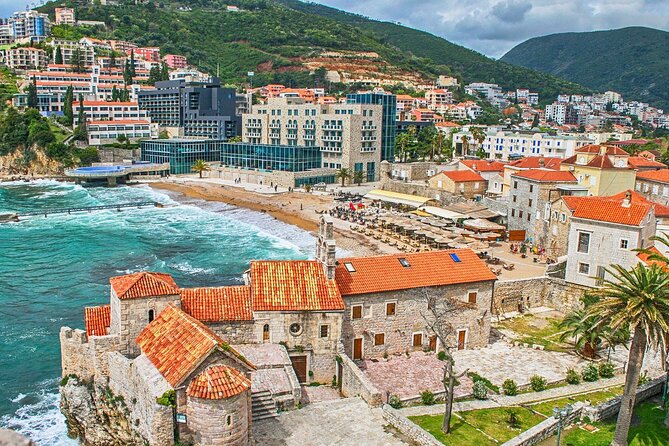
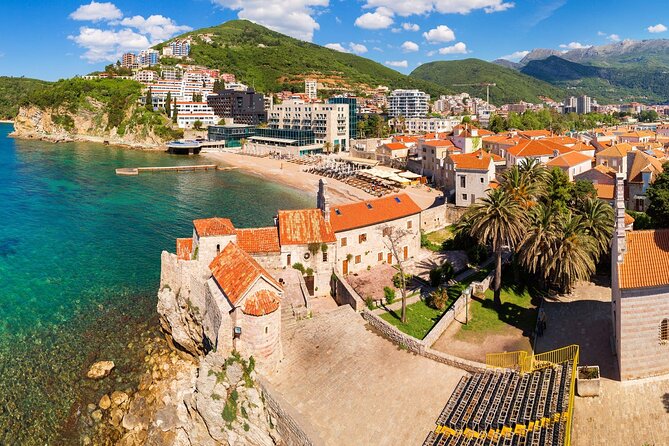
Day four starts in Budva, where you’ll see the split personality of the coast: Old Budva with its medieval center on one side, and New Budva with modern buildings and nightlife-oriented areas on the other. The tour highlights sites like St. Ivan church and the small St. Mary church, which help you understand what “old town” means beyond just a postcard.
Next is a quick coast stop near Sveti Stefan. You can’t visit the island itself anymore because it has become an exclusive residential resort, but it still works as a photo stop. Standing on the mainland with the island shape in view is enough to understand why this stretch of Montenegro is so famous.
Then you cross into Albania and land in Shkoder, a city with a long habitation history. The tour points out the old walls reaching back toward the 1st millennium BCE, plus references to Illyrian and Roman-era connections. In practical terms, Shkoder is about energy and texture: it feels Venetian-influenced, with markets and architecture that remind you how trade routes shaped the Adriatic.
The highlight here is Rozafa Castle, where you get tremendous scenery over the lake and river systems meeting toward the Adriatic. If you’re the type who loves a view you can keep staring at, you’ll enjoy this stop. The tour also mentions local connections to Venetian masks being handmade in Shkoder, which gives the town a creative edge beyond ancient stones.
Mrizi i Zanave: slow-food farming that actually changes local life
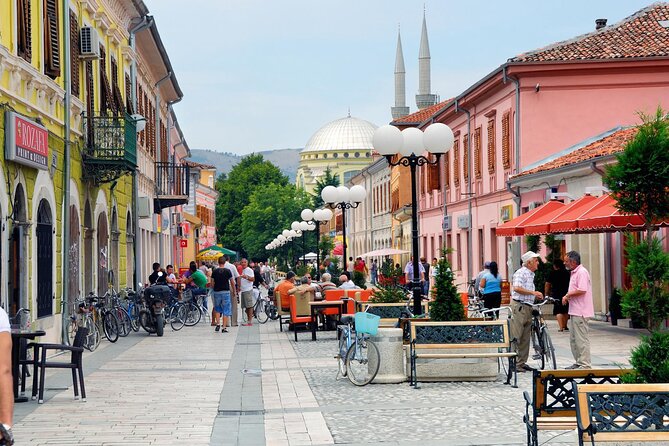
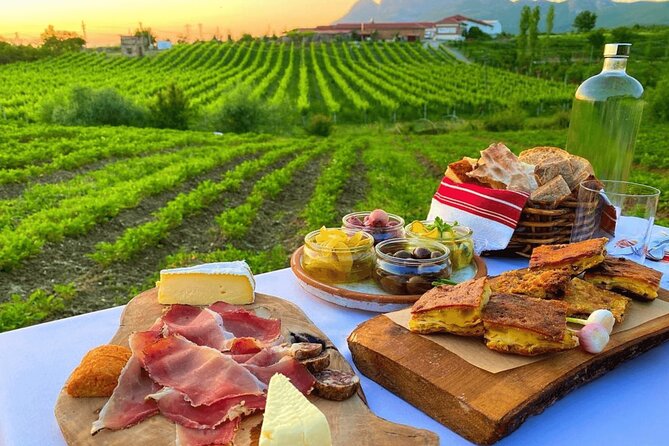
If you want one day that doesn’t feel like another camera sweep, make it Mrizi i Zanave. This is a slow-food agro-tourism farm, and the focus is practical: you’ll tour the farm, learn its story, and see how the operation supports local employment. The tour notes the farm created jobs for more than 400 people in the surrounding area, which is the kind of real-world impact that makes a food stop more than just lunch.
You’ll also learn how the family collects, processes, and preserves regional bio fresh local products. A small detail with big meaning is that old communist buildings have been adapted to store the farm’s products. That turns the site into a living example of how communities reuse what they inherit.
You’ll have free time for a traditional lunch or to buy fresh produce. I like that this is built into the schedule instead of being an optional add-on. If you’re a foodie, you’ll get something you can take home as flavor, and if you’re not, you’ll still leave with a better understanding of what slow-food looks like in the Balkans.
Prizren in Kosovo: mosque color, fortress panoramas, and a river city feeling
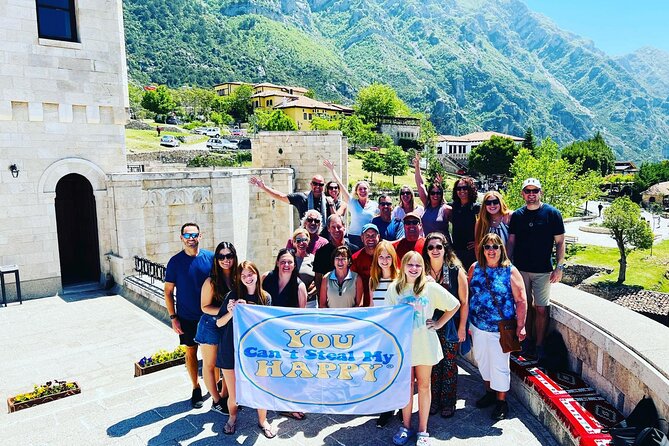
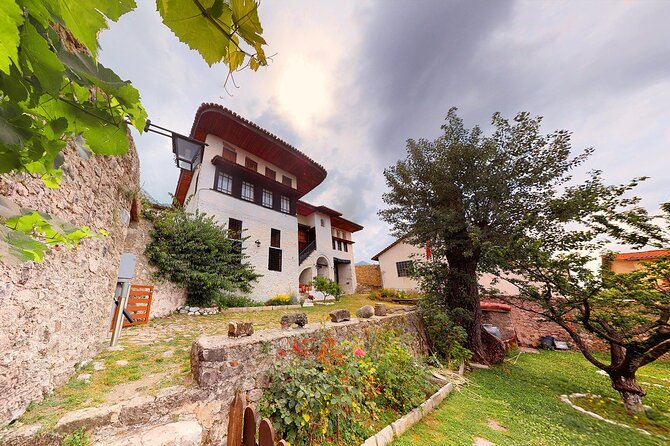
Prizren is presented as the cultural capital of Kosovo, and the tour frames it around more than monuments. The city is described as having religious tolerance and a history shaped by Byzantine and Ottoman crossroads energy. The river running through the old town, plus bridges under and over it, gives you a walking-city vibe that feels different from the coastal stops.
The mosque visit is Sinan Pasha Mosque, with a note about its arabesque color and patterns. Short as it is, a mosque stop like this can become your visual anchor for the day, especially when the rest of the city is all street and river geometry.
Then you go up to Kalaja Fortress for a panorama over Prizren. Fortress views are a classic travel tool for a reason: once you see the layout from above, the city streets start making sense at ground level. The tour also gives you time to enjoy the city, so you’re not only climbing and ticking boxes.
Gjakova bazaar, Decan monastery UNESCO frescoes, and Rahovec wine terrain
Kosovo days here are a strong mix of markets, art, and agriculture.
In Gjakova, the tour focuses on the oldest and largest bazaar in Kosovo. It was destroyed during the first Balkan wars, World War II, and the Kosovo war, then rebuilt to its earlier state. That’s a lot of history packed into a single place, but the payoff is simple: you can enjoy a meal or browse stores with traditional handmade crafts.
Then comes Decan, with the Monastery of Decan. It’s described as standing out for its white color, and it’s also active, since Orthodox monks still inhabit the monastery and make organic foods such as cheeses. The UNESCO angle comes through the frescoes, with the tour noting they portray 14th-century life and the Palaeologan renaissance, plus the monastery became UNESCO in 2004.
The final stop before returning toward Prizren is Rahovec, called the capital city of viticulture in the area. The tour mentions evidence grapes were cultivated since Illyrian times, about 2,000 years, plus the vineyards sit at altitudes around 350 to 520 meters. It’s a nice palate cleanser after monastery art and bazaar crowds, because the idea here is terrain and seasons, not just buildings.
Kruja’s bazaar and castle: shopping streets, plus siege-era escape paths
Albania starts to feel more intimate once you reach Kruja. The tour presents Kruja as a symbol of Albanian resistance against Ottoman expansion in the 15th century. The town sits on rocky, mountainous terrain around 560 meters above sea level, which makes it feel naturally defensive even before you see the castle.
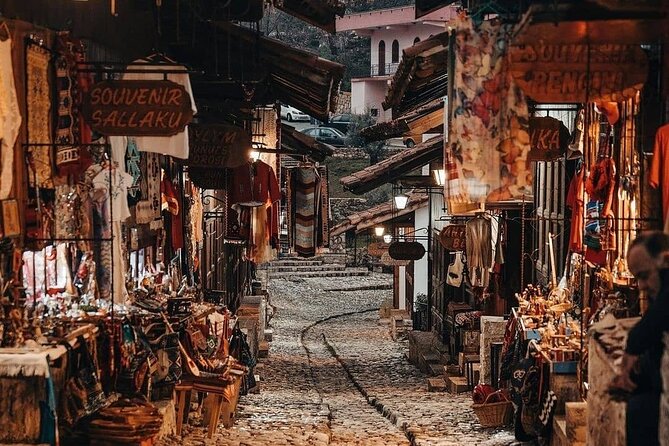
The Kruja Medieval Old Bazaar is a top shopping stop. You’ll find narrow streets and wooden houses, plus stalls selling souvenirs and handmade items like carpets and jewelry. I like that the tour calls this out as the best place for souvenir shopping in Albania, because that saves you from overspending later.
Then the main attraction: Kruja Castle. The tour notes it was built during the 5th century A.D. and sits strategically on a hill. One of the more memorable moments here is that the tour guide takes you through hidden paths used by locals to leave unnoticed when enemies surrounded the castle.
There’s also time for lunch and more browsing. If you want a moment that feels like living history rather than a museum, Kruja often delivers that.
Tirana with a local companion: byrek, coffee culture, raki, and Bunk’Art 2
Tirana is the tour’s finale, and it’s where you shift from “seeing” to “eating and understanding modern Albania.” You’ll meet with a local companion and get a culinary-focused walkthrough rather than a generic city tour.
The first food stop is at Tregu Çam, where you’ll try Byrek and have breakfast like locals. Then you’ll move through Çam bazaar, founded by the Albanian Çam community, originally from an area called Çameria in today’s North-Western Greece. That detail gives you a sense of how migration and identity show up in everyday shopping streets.
Back in Tirana, the tour is designed to help you avoid tourist traps and instead try treats in neighborhoods the local companion knows well. You’ll get traditional dessert at an authentic pastry, walk by street markets selling fresh produce, and join locals for Albanian coffee at a cozy café.
Then comes the fun market twist: Pazari i Ri, called the Bicycle bazaar, where you can find second hand clothes and even second hand furniture. After that, you’ll head to the New Bazaar for lunch: Qofte grilled meatballs with freshly baked bread. Vegetarians are covered with bread plus Albanian Gjize (cottage cheese). You’ll also taste Albanian Raki, and it’s framed as part of the local food culture, not just a shot.
To end, you visit BUNK’ART 2. It’s a museum inside a nuclear bunker built for Enver Hoxha and top party members during the Cold War. The bunker was hidden from the public until 2014, when it opened as a museum, and it’s described as a video museum about the communist army history and day-to-day life under the regime.
If you’ve been wondering how the Balkans moved from 20th-century conflict into today, this closing stop ties the week together.
What $2,754.29 gets you, and the tradeoffs to watch for
This price is high on paper, but it includes the stuff that usually eats your time and money when you do it yourself. Your trip includes accommodation and breakfast for all overnights, a professional tour guide, transport provided by the company, and entry tickets for the sites that are visited. It also includes hotel pickup and hotel drop off in Tirana, plus tourist taxes, road taxes, and petrol.
What you should plan to pay separately is lunch, drinks, and snacks, plus souvenirs and personal spending. The tour also recommends tipping your guide and driver as standard practice for good service. If you need a single room, it’s possible for a supplement of 30 Euros extra per night per person.
Tradeoff wise, this is a “see a lot” style itinerary. Your days are busy, and there are uneven walks like the Sarajevo walking routes plus older cobblestone streets. If you hate driving or you need long unstructured time every day, you might feel squeezed.
Still, for value-focused travelers who want logistics handled and a guided thread from Serbia to Albania, this can feel like a smart purchase, not just a pricey badge.
Should you book? My take for the right kind of traveler
Book this if you want a guided, small-group route that hits major cities, UNESCO sites, and standout food stops without you planning every connection. It suits active travelers who like history told through real places and enjoy food that’s tied to culture, not only restaurant dining.
Skip it if you want a beach-and-laze pace, or if you prefer deep time in one country instead of rapid contrasts. Sarajevo, Kotor, and Tirana each have a different mood, but the schedule means you’ll be moving often.
If you do book, I’d recommend packing for uneven ground and wearing shoes you trust. Then lean into the structure: take the guided stops to get context, and use the free-time windows to eat well, shop smart, and let the cities show you what they’re like outside the main sights.
FAQ
Where does the tour start and end?
It starts in Belgrade, Serbia, and ends with hotel drop off in Tirana, Albania.
What time does the tour begin in Belgrade?
The start time listed is 8:00 am.
How many people are in the group?
The maximum group size is 10 travelers.
What is included in the price?
Included are accommodation and breakfast for all overnights, a professional tour guide, transport by the company, entry tickets for the sites visited, hotel pickup and drop off in Tirana, tourist taxes, road taxes, petrol, and 7 breakfasts.
Are lunch and drinks included?
No. Lunch, drinks, and snacks are not included.
Can I get a single room, and what does it cost?
Single room occupancy is possible for an extra charge of 30 Euros per night per person.
Is the booking refundable if I cancel?
This experience is non-refundable and cannot be changed for any reason.
The Rest of the Serbian Shortlist
Everything We Have Reviewed in Serbia
Over the Border for the Day
Just Reviewed in Serbia
- Private Half Day Serbia Tour Novi Sad and Petrovaradin Fortress★ 5.0 · 3 reviews
- Private Wine Tasting by Party in Belgrade★ 5.0 · 3 reviews
- Belgrade: The White Emigration in Serbia in the Wake of the Russian Revolution★ 5.0 · 3 reviews
- Zica and Studenica monastery From Belgrade★ 5.0 · 3 reviews
- Feel Belgrade Welcome tour★ 4.5 · 3 reviews
Cross-Border Trips from Belgrade, side by side.
 ★ 4.7From Belgrade: Private Day Trip to RomaniaFrom $22223 reviews
 ★ 5.0Private Day Trip to Timisoara from BelgradeFrom $22622 reviews
 ★ 5.0Private Day Trip To Budapest From BelgradeFrom $31811 reviews
 ★ 5.0Small Group Balkans Tour; Belgrade to Athens or Corfu in 14 DaysFrom $4,8337 reviews
 ★ 5.0Private Transfer Belgrade to SarajevoFrom $3337 reviews
 ★ 5.0Private Day Trip/Transfer Tour from Belgrade to TimisoaraFrom $2105 reviews
Also on these Serbia lists